
ANXIETY & STRESS
How to Calm Anxiety-Related Heart Palpitations Safely
Simple calming strategies may ease palpitations associated with anxiety, but do not replace evaluation when the cause is unclear.
Written by: Dr. Albana Greca, MD, MMedSc, Family Physician, IDF Fellow
Medical review pending: Dr. Benard Shehu
Quick Answer
If you recognize a familiar episode that your clinician has already assessed and you feel otherwise well, sit comfortably and breathe gently. If the episodes are new or keep coming back, arrange a medical assessment.
When to get emergency help
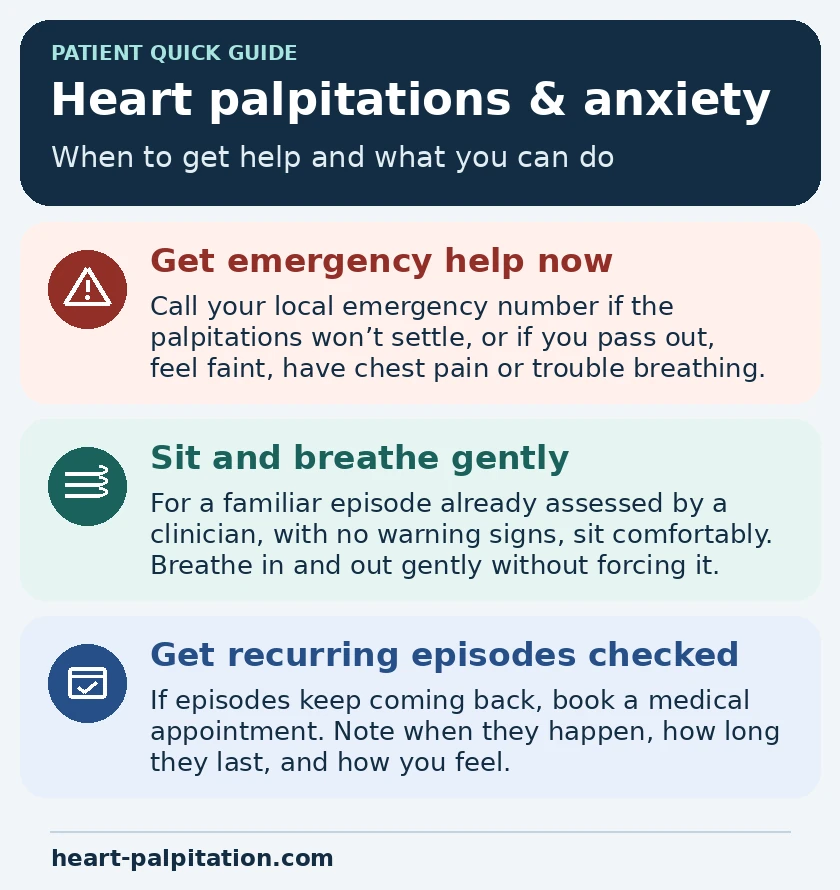
Call your local emergency number if palpitations are ongoing and won’t settle, or if you have chest pain, shortness of breath, feel like you might faint, or faint. Do not drive yourself.
If the palpitations and warning symptoms have stopped, seek urgent medical assessment.
Key Medical Takeaways
- Anxiety-related symptoms and arrhythmias can overlap.
- An ECG captured during symptoms can clarify the rhythm.
- Recurrent or unexplained episodes should not automatically be labeled anxiety.
- Palpitations that won’t settle or occur with warning symptoms require emergency care.
First check for urgent symptoms
A racing or pounding heartbeat can feel frightening, especially when you are already anxious. If it comes with any of the warning signs above, or it keeps going without settling, call your local emergency number. Stop what you are doing and avoid driving yourself.
If the palpitations and warning symptoms have already passed, seek urgent medical advice. Tell the clinician what happened, even if you feel back to normal by the time you call.
Use comfortable slow breathing
If this feels like an episode you have already discussed with your clinician and there are no warning signs, sit in a chair with your feet on the floor. Relax your shoulders. Let the air come in gently through your nose and out through your mouth. A slow count can help if it feels comfortable. Avoid forcing deep breaths or breathing into a paper bag.
If paying attention to your breathing makes you more uneasy, feel your feet against the floor and name a few things you can see. These techniques can ease the feeling of panic. You can feel calmer and still need an assessment if the episodes keep returning or change.
Reduce avoidable triggers
Look at what happened before the episode. Did you have an energy drink, more coffee than usual, nicotine, or alcohol? Had you slept poorly? If you often feel your heart race after an afternoon energy drink, try skipping it for a few days and note whether the pattern changes.
If symptoms started after a new medicine or dose change, ask your clinician or pharmacist to review it. Bring a list of prescription medicines, over-the-counter products, and supplements. Speak with your prescriber before changing a prescribed medicine.
Plan follow-up if episodes persist
Book an appointment if the palpitations keep returning, happen more often, or last more than a few minutes and then settle. Mention any known heart condition or family history of heart problems. Write down when an episode started, how long it lasted, what you were doing, and what else you felt.
An ECG records your heart rhythm for a short time. If your symptoms come and go, your clinician may suggest a longer monitor to try to capture an episode. If anxiety or panic is also affecting your daily life, ask about treatment options such as cognitive behavioral therapy.
Frequently Asked Questions
Can anxiety and a heart rhythm problem happen together?
Yes. Having anxiety does not exclude an arrhythmia, and symptoms should be assessed according to risk.
Can an ECG be normal between episodes?
Yes. Short recordings may miss intermittent rhythm changes. A clinician may recommend extended monitoring.
Related Reading
References
This page is educational and does not substitute for individual medical assessment.
Related guide: Anxiety, Stress & Heart Palpitations — Complete Guide.
This gave me a fresh angle to consider. I enjoyed the article and appreciate the care you took with the explanation.