
Esophageal Palpitations: Esophageal Spasm or Heart Palpitations?
Some people describe an unusual squeezing, fluttering, jumping or pulsating sensation behind the breastbone and wonder whether it is coming from the heart or the esophagus.
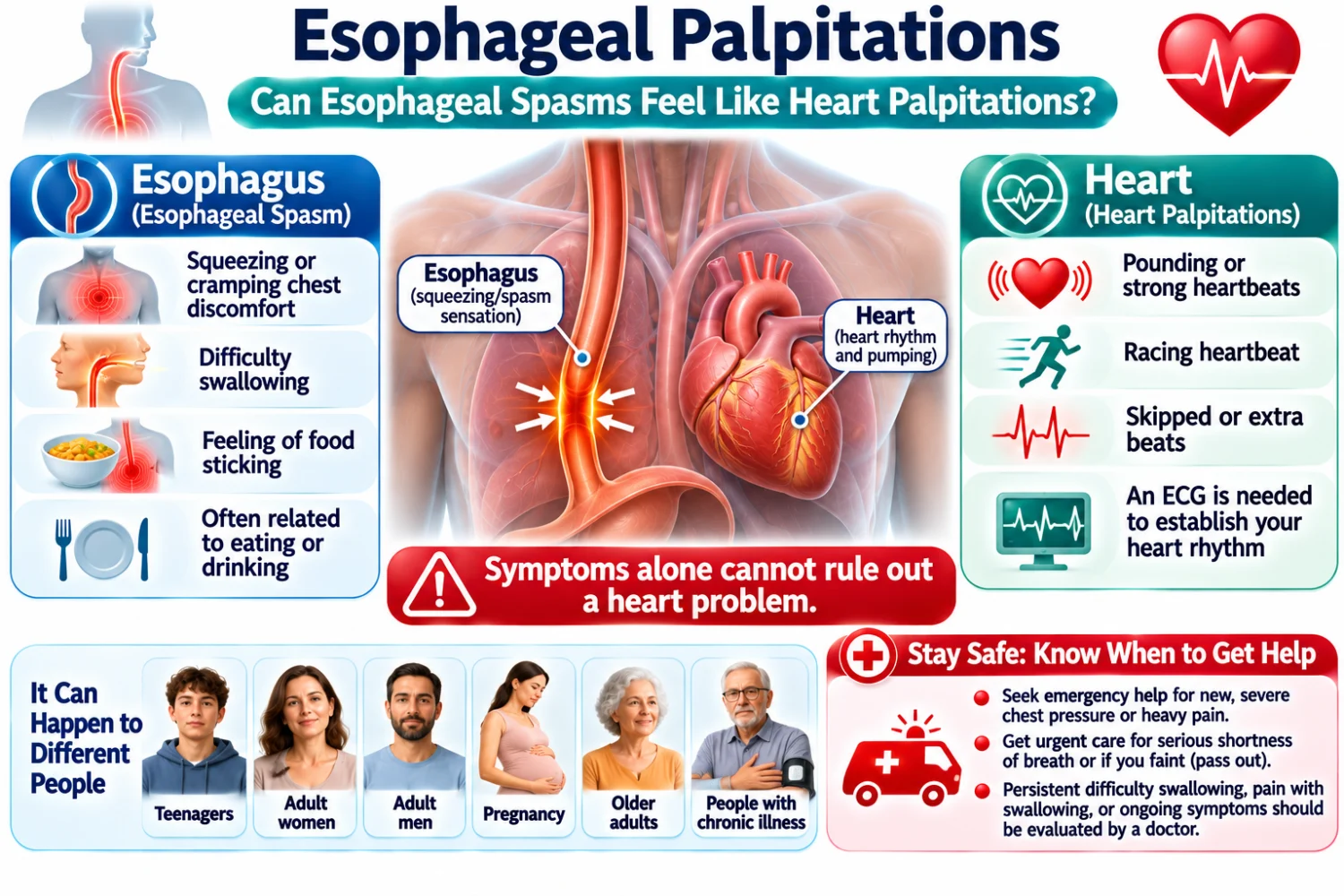
The term “esophageal palpitations” is not a formal medical diagnosis. Esophageal conditions such as distal esophageal spasm can cause powerful chest sensations that may be confused with heart symptoms, but true heart palpitations refer to awareness of the heartbeat itself.
Can Esophageal Spasms Feel Like Heart Palpitations?
- Esophageal spasm can cause intense squeezing or pressure in the chest that may be mistaken for a heart problem.
- Esophageal spasm more typically causes chest pain, difficulty swallowing, regurgitation or the feeling that food is stuck.
- True heart palpitations mean awareness of the heartbeat — such as racing, pounding, fluttering, skipped or irregular beats.
- GERD and esophageal motility disorders can coexist, but reflux does not prove that the esophagus is causing your heartbeat symptoms.
- Esophageal manometry is the main test used to diagnose esophageal motility disorders.
- New or severe chest pressure, particularly with shortness of breath, sweating, nausea, fainting or pain spreading to the arm, jaw or back, requires urgent medical assessment.
What Are “Esophageal Palpitations”?
Patients sometimes use the phrase “esophageal palpitations” to describe a strange movement, squeezing or pulsating sensation behind the breastbone.
Medically, however, palpitation refers to awareness of the heartbeat.
Esophageal spasm is different. It involves abnormal contractions of the muscular tube that carries food from the mouth to the stomach.
Because the esophagus passes through the chest close to the heart, symptoms arising from it may be difficult for a patient to localize precisely.
This is one reason why esophageal chest symptoms and cardiovascular symptoms can sometimes feel surprisingly similar.
What Does an Esophageal Spasm Feel Like?
The symptoms are usually more related to swallowing and chest discomfort than to awareness of the heartbeat.
Squeezing Chest Pain
Esophageal spasm can cause sudden, sometimes severe squeezing pain behind the breastbone.
The discomfort can be difficult to distinguish from cardiac chest pain based on sensation alone.
Difficulty Swallowing
Food or liquids may feel difficult to move through the esophagus.
Food Feels Stuck
Some people describe the sensation that food or another object is lodged in the throat or chest.
Regurgitation
Food or liquid may come back upward into the esophagus or mouth.
Can Food or Drinks Trigger Esophageal Spasm?
Some people notice that swallowing particular foods or beverages triggers symptoms.
Very hot or very cold foods and drinks are recognized triggers in some patients.
The pattern is individual, so keeping a brief food-and-symptom record may help identify reproducible triggers.
Difficulty swallowing that becomes persistent, progressively worse or associated with weight loss should not simply be managed by avoiding foods; it deserves medical evaluation.
What Types of Esophageal Spasm Are Recognized?
Premature, Poorly Coordinated Contractions
Distal esophageal spasm is a motility disorder in which contractions occur prematurely rather than following the normal coordinated swallowing sequence.
Clinically relevant disease is usually considered in a person who has symptoms such as difficulty swallowing or non-cardiac chest pain together with characteristic findings on high-resolution manometry.
Excessively Powerful Contractions
Hypercontractile esophagus involves unusually forceful esophageal contractions.
Older sources may use terms such as “nutcracker esophagus”. Modern high-resolution manometry provides a more precise classification of esophageal motility disorders.
Esophageal Spasm or Heart Palpitations? Real-Life Scenarios Across Ages and Sexes
Both men and women can experience true heart palpitations, esophageal discomfort or both. Esophageal spasm is uncommon, and chest symptoms should not be assigned to the esophagus solely because they occur after eating. These scenarios illustrate questions a clinician may ask rather than providing diagnoses.
Children and teenagers
A teenager reports a strange chest squeeze while swallowing very cold drinks. Esophageal irritation, reflux or swallowing difficulty may be relevant, but persistent pain, food sticking, exercise-related symptoms, fainting or a family history of sudden cardiac death merits assessment. Chest symptoms in children require age-appropriate evaluation, and recurring difficulty swallowing may warrant pediatric gastroenterology review.
Healthy young adult women and men
A 28-year-old experiences a brief squeezing sensation after eating quickly and later notices a strong heartbeat. The digestive sensation and palpitation may be separate events. If the pulse truly races or becomes irregular, recording an ECG during symptoms can help; if food sticks or swallowing causes repeated pain, evaluation for reflux, esophageal inflammation or a motility disorder may be needed.
People who notice symptoms only after swallowing
An adult experiences chest tightness or a fluttering feeling with hot or cold liquids. The temporal association suggests an esophageal mechanism is possible, but it is not definitive. Rare swallowing-triggered atrial arrhythmias also occur, so repeated actual racing or irregular beats associated with swallowing should prompt rhythm evaluation as well as assessment of swallowing symptoms.
Pregnancy and postpartum
Pregnancy commonly worsens reflux, while anemia and increased cardiovascular workload may raise heartbeat awareness. Pregnant and postpartum patients should not attribute persistent palpitations or severe chest symptoms automatically to digestion. New chest pressure, marked breathlessness, fainting or rapid deterioration calls for emergency assessment, including consideration of cardiovascular and thromboembolic conditions.
Perimenopause and menopause
Hot flashes, anxiety, fragmented sleep and reflux may coexist with uncomfortable chest sensations. They do not exclude atrial fibrillation, coronary disease or an esophageal disorder. Recurrent dysphagia should be evaluated independently of hormonal symptoms.
Older adult women and men
An older patient develops new squeezing chest discomfort after meals. Although esophageal spasm can mimic angina, coronary ischemia must be considered, especially when pain is new, exertional or accompanied by sweating, nausea or breathlessness. New or progressive difficulty swallowing, anemia or unintended weight loss also requires timely investigation.
When You Have a Chronic Illness: Why the Same Symptoms Need Different Evaluation
Coronary artery disease, arrhythmia or heart failure
For patients with established heart disease, chest pressure must not be dismissed because it starts with food or resembles reflux. Angina and esophageal spasm can feel alike. New chest pain, a persistently abnormal pulse, faintness or worsening breathlessness warrants prompt or emergency cardiac evaluation according to severity. Do not self-treat with someone else’s heart medication.
Diabetes
Diabetes can coexist with reflux, esophageal dysmotility and autonomic neuropathy, but it is also associated with higher cardiovascular risk. Some patients experience atypical cardiac symptoms such as nausea or upper-abdominal discomfort. A new chest symptom needs appropriate evaluation rather than reliance on antacids or a presumption of digestive origin.
GERD, hiatal hernia and eosinophilic esophagitis
Heartburn, regurgitation and swallowing difficulties suggest that a gastrointestinal disorder may be present, but they do not prove distal esophageal spasm or exclude cardiac disease. Persistent dysphagia, food impaction or failure to respond to prescribed reflux treatment may require upper endoscopy and specialist evaluation; biopsies may be needed when eosinophilic esophagitis is suspected.
Scleroderma, other connective-tissue disease or known esophageal motility disorder
These conditions can alter esophageal clearance and swallowing. Management should focus on the documented disorder, nutritional status and aspiration risk. Distal esophageal spasm and ineffective esophageal motility are different diagnoses; high-resolution manometry can help distinguish them when clinically appropriate.
Chronic kidney disease, lung disease and multiple medications
Patients with kidney or pulmonary disease may have other causes of chest discomfort or breathlessness, and several prescribed medications can cause pill esophagitis or alter swallowing function. Review pills that stick, large tablets, opioid use and new medications with a clinician rather than changing essential treatment independently. Kidney disease also affects the safety of some medications and investigations.
How Can I Tell Whether the Sensation Is Coming From My Heart?
Unfortunately, the location of chest symptoms alone may not give a reliable answer.
Esophageal pain can feel like squeezing, pressure or burning behind the breastbone. Heart-related pain can also feel like pressure, squeezing, fullness or discomfort.
Meanwhile, true heart palpitation symptoms commonly feel like racing, pounding, fluttering, skipped beats or irregular beats.
If you place your fingers on your pulse during a symptom and feel a rapid or clearly irregular rhythm, that information can be useful — but it is not a substitute for an ECG or medical evaluation.
New or unexplained chest pain should not automatically be attributed to the esophagus, reflux, anxiety or a known digestive condition.
When Chest Pain and Palpitations Occur Together
If you are feeling both a chest sensation and a racing or irregular heartbeat, the symptoms deserve particular attention.
An esophageal disorder may cause chest pain, while an arrhythmia may cause the heartbeat sensation. Two symptoms occurring at the same time do not necessarily have the same cause.
Read our guide to chest pain and heart palpitations for more information about this combination.
Is GERD Related to Esophageal Spasm?
Gastroesophageal reflux disease (GERD) can cause heartburn, regurgitation and chest discomfort.
GERD may coexist with esophageal spasm, and when clinically important reflux is present, treating the reflux may improve reflux-related symptoms.
However, the old explanation that stomach acid enters the esophagus and the esophagus then spasms specifically to “push the acid back into the stomach” is too simplistic and should not be considered an established mechanism.
If reflux and heartbeat sensations often occur together, you may also find our guide to GERD and heart palpitations helpful.
A hiatal hernia may also contribute to reflux symptoms in some people, but it should not automatically be assumed to explain true palpitations.
Can Anxiety Cause Similar Symptoms?
Anxiety can increase awareness of sensations in the chest and can cause true heart palpitations through the body’s stress response.
Stress may also worsen the perception of esophageal pain or discomfort.
But chest pain, difficulty swallowing or recurrent palpitations should not automatically be attributed to anxiety before appropriate medical causes have been considered.
How Are Esophageal Spasms Diagnosed?
Diagnosis may require more than one test because doctors first need to exclude structural disease and determine how the esophageal muscles are functioning.
Medical History
Your doctor may ask whether symptoms occur during swallowing, whether food feels stuck, whether liquids trigger symptoms, and whether you have heartburn or regurgitation.
Upper Endoscopy
Endoscopy allows the doctor to examine the lining of the esophagus and look for inflammation, narrowing, obstruction or other structural disease.
Barium Esophagram
A barium swallow can show how swallowed material moves through the esophagus and may provide information about abnormal emptying or obstruction.
Esophageal Manometry
High-resolution esophageal manometry measures the timing, coordination and strength of esophageal contractions.
It is the principal test for diagnosing esophageal motility disorders.
Reflux Testing
When GERD is uncertain, pH or impedance-pH monitoring may be used to measure reflux and determine whether symptoms correlate with reflux episodes.
Heart Evaluation When Needed
If symptoms also include true palpitations, exertional chest discomfort, dizziness or other cardiovascular symptoms, ECG or further heart-rhythm evaluation may be appropriate.
What Can You Safely Do at Home When You Feel Chest Fluttering After Eating or Swallowing?
If you have no emergency warning signs, stop strenuous activity, sit comfortably and note exactly what happened: swallowing difficulty, squeezing pain, heart pounding, an irregular pulse, food sticking or regurgitation. Note the timing in relation to meals and hot or cold drinks. A symptom diary may guide evaluation but cannot establish the cause.
If swallowing is comfortable, eat slowly, take manageable bites and avoid foods or temperatures that reliably provoke symptoms. Do not force food or large amounts of water down when a bolus feels stuck. Persistent food impaction or inability to swallow saliva requires urgent emergency assessment.
For reflux symptoms, follow prescribed therapy and consider remaining upright after eating. Do not assume that peppermint oil, herbal products, antacids or relaxing breathing will treat a genuine esophageal motility disorder—or protect against a cardiac emergency. Peppermint may worsen reflux in some patients.
If you notice a racing or irregular pulse, talk to a clinician about ECG monitoring. If swallowing difficulty or noncardiac chest pain recurs, a gastroenterologist may consider endoscopy, high-resolution manometry, reflux testing or barium studies based on clinical findings.
Emergency symptoms versus a planned appointment
Call emergency services for new severe or persistent chest pressure, pain radiating to the arm or jaw, significant breathlessness, fainting, collapse or serious associated illness. Do not drive yourself. Seek prompt medical review for recurring dysphagia, painful swallowing, unintended weight loss, vomiting blood or black stools; inability to swallow saliva or an obstructed food bolus is an emergency.
Evidence: ACG clinical guideline on esophageal physiologic testing; Mayo Clinic: symptoms and causes.
How Are Esophageal Spasms Treated?
Treatment depends on the specific diagnosis, symptom severity and whether another condition such as GERD is present.
First Decide What the Patient Means by “Palpitation”
When a patient tells me, “I feel palpitations in my esophagus,” one of my first questions is: What exactly are you feeling?
Is it squeezing pain? A feeling that food is stuck? Burning after eating? A rapid heartbeat? Skipped beats? Or a strong pulse in the chest?
Those are different symptoms and can lead us toward very different diagnoses.
The esophagus and heart are close together, so patients cannot always tell which structure is producing the sensation. That is precisely why significant chest symptoms should be evaluated rather than diagnosed by location alone.
When Should You See a Doctor?
Arrange medical evaluation if you have:
- Recurrent or significant chest discomfort
- Difficulty swallowing solids or liquids
- Food repeatedly feeling stuck
- Frequent regurgitation
- Symptoms interfering with eating or drinking
- Recurrent true heart palpitations
- Unexplained weight loss
- Symptoms becoming progressively worse
Do Not Assume Severe Chest Pain Is Esophageal
Esophageal spasm can produce significant chest pain, but potentially serious heart conditions can cause similar symptoms.
Seek urgent or emergency medical care for new or severe chest pressure or pain, particularly if it occurs with:
- Shortness of breath
- Fainting or near-fainting
- Severe dizziness
- Cold sweating
- Nausea or vomiting
- Pain spreading to the arm, shoulder, neck, jaw or back
- A rapid or clearly irregular heartbeat
- Rapidly worsening symptoms
A known history of GERD, hiatal hernia or esophageal spasm does not rule out a heart problem.
Esophageal Palpitations: FAQs
Are esophageal palpitations a real medical condition?
“Esophageal palpitations” is not a standard medical diagnosis. Patients sometimes use the phrase to describe chest sensations arising around the esophagus.
Recognized conditions include distal esophageal spasm, hypercontractile esophagus, achalasia and other esophageal disorders.
Can esophageal spasms feel like heart palpitations?
They can create powerful chest sensations that may be difficult to localize, but esophageal spasm more typically causes squeezing chest pain and swallowing symptoms.
True palpitations refer specifically to awareness of the heartbeat.
Can esophageal spasms feel like a heart attack?
Yes. Esophageal spasm can cause severe squeezing chest pain that may resemble cardiac pain.
Because heart attack symptoms can be similar, new severe squeezing chest pain requires prompt medical assessment.
Does GERD cause esophageal spasms?
GERD can coexist with esophageal spasm, and treating confirmed reflux can be helpful when reflux contributes to symptoms.
However, GERD should not automatically be assumed to be the cause of an esophageal motility disorder.
What is the best test for esophageal spasm?
High-resolution esophageal manometry is the principal test for evaluating esophageal motility and diagnosing disorders such as distal esophageal spasm.
Endoscopy and other tests may also be needed to exclude structural or reflux-related causes.
Is nutcracker esophagus the same as esophageal spasm?
“Nutcracker esophagus” is older terminology associated with unusually strong contractions. Modern classification uses terms such as hypercontractile esophagus based on high-resolution manometry.
Can anxiety cause esophageal spasm and palpitations together?
Stress and anxiety can increase heartbeat awareness and may influence the perception of digestive symptoms.
However, persistent chest pain, swallowing difficulty or palpitations should not automatically be attributed to anxiety.
When should I worry about chest sensations after eating?
Recurrent symptoms associated with swallowing or reflux should be discussed with your doctor.
New severe chest pressure, fainting, severe breathlessness, sweating or pain spreading to the arm or jaw requires urgent assessment regardless of whether you recently ate.
Continue Reading
Evidence Used for This Article
- Mayo Clinic. Esophageal Spasms: Symptoms and Causes .
- Mayo Clinic. Esophageal Spasms: Diagnosis and Treatment .
- American College of Gastroenterology. Esophageal Physiologic Testing .
- Yadlapati R, et al. Esophageal Motility Disorders on High-Resolution Manometry: Chicago Classification Version 4.0 .
- Roman S, et al. Technical Review on Diagnostic Criteria for Distal Esophageal Spasm .
- American Heart Association. Heart Attack Warning Signs .