
Key Medical Takeaways
- Call emergency services now if palpitations continue without stopping or come with chest pain, shortness of breath, fainting or near-fainting.
- Seek urgent care today if chest pain, shortness of breath or near-fainting came with palpitations and has now stopped. If you passed out with palpitations, during exercise or while lying down, call emergency services even if you feel better.
- Book a medical appointment for episodes that keep coming back, become more frequent or last longer than a few minutes and then stop. If palpitations happen during exercise, stop and get checked before resuming strenuous activity.
Quick Answer
A single brief flutter or skipped beat can be less concerning if you feel well before and afterward. If it keeps happening, ask your clinician whether a rhythm recording could help.
Call your local emergency number now if your palpitations do not go away, or if you have them with chest pain or pressure, shortness of breath, fainting, or a feeling that you might pass out. See what to do during an episode.
How Worried Should You Be About Heart Palpitations?
When a patient describes a racing or skipping heart, I ask what they were doing, how long it lasted and what else they felt. A brief thump at rest and a racing heartbeat that makes you feel faint call for different actions.
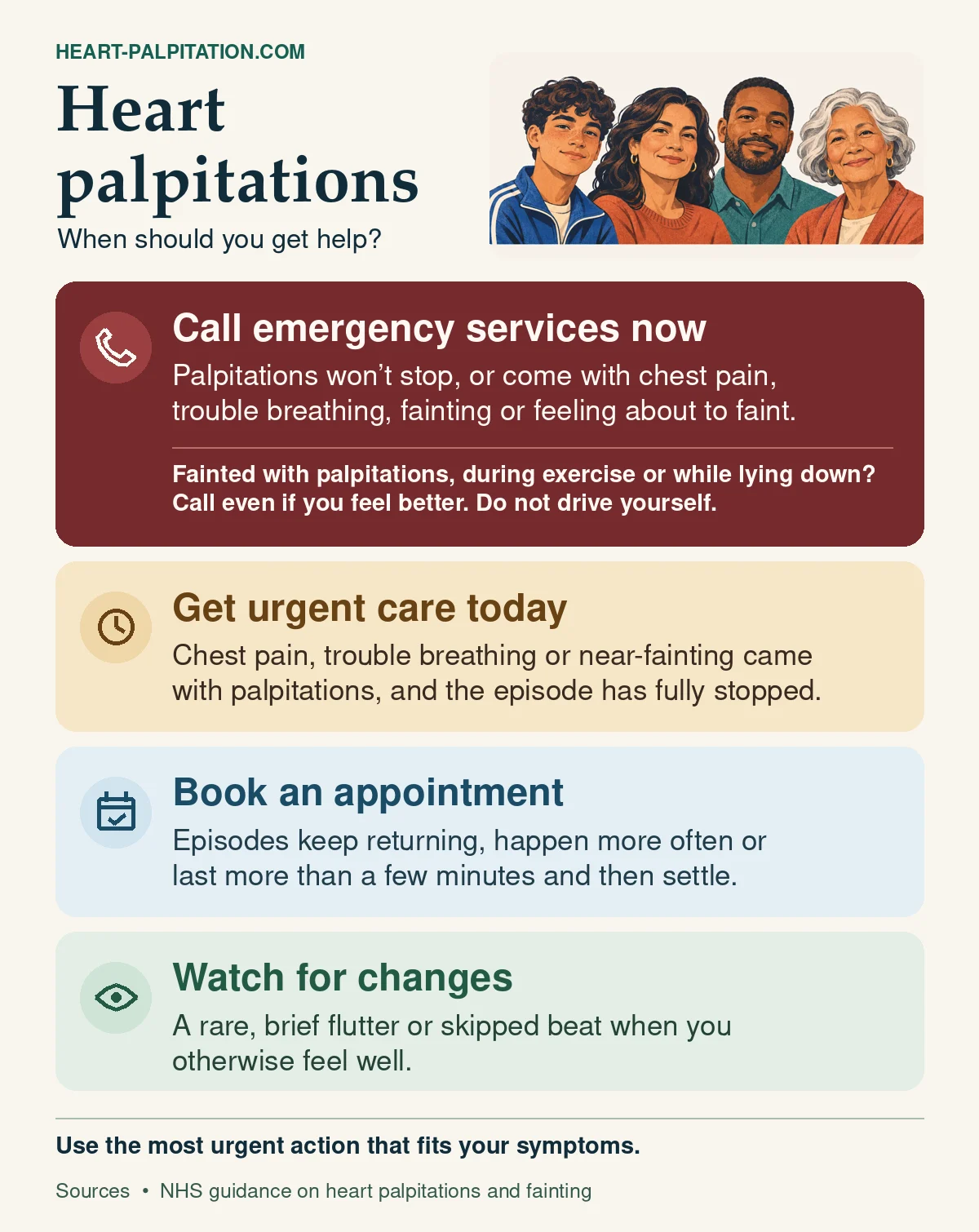
Read the guide as text
Call emergency services
Palpitations that keep going, or palpitations with chest pain, trouble breathing or feeling faint.
Get urgent care today
Chest pain, shortness of breath or near-fainting came with palpitations and has now stopped.
Book an appointment
Episodes that recur, happen more often or last several minutes and then settle.
Watch for changes
A rare, brief flutter or skipped beat when you otherwise feel well.
When Are Heart Palpitations Often Less Concerning?
Many people occasionally notice an extra beat, skipped sensation or brief flutter.
Palpitations tend to be more reassuring when they:
- last only a few seconds;
- occur infrequently;
- are isolated rather than sustained;
- have an obvious temporary trigger;
- stop when the trigger resolves;
- occur without chest pain;
- occur without significant shortness of breath;
- occur without dizziness or fainting; and
- do not reduce your ability to exercise or perform normal activities.
Common temporary triggers can include:
- stress or anxiety;
- lack of sleep;
- strenuous exercise;
- excess caffeine;
- nicotine;
- alcohol;
- fever;
- dehydration; and
- certain medicines or stimulants.
Symptoms alone cannot confirm the rhythm. Even benign premature beats and genuine arrhythmias can sometimes feel similar. If the episodes keep returning or change from your usual pattern, medical evaluation becomes more useful.
Read our main guide to heart palpitation symptoms for the different sensations people describe.
When Should You See a Doctor for Heart Palpitations?
Arrange a medical appointment if your palpitations:
- keep coming back;
- are happening more frequently;
- last longer than a few minutes and then stop;
- feel fast or irregular in episodes that end;
- have changed noticeably from your previous pattern;
- occur regularly while you are resting;
- repeatedly wake you from sleep;
- are associated with unusual fatigue or weakness;
- are reducing your exercise tolerance;
- began after starting or changing a medicine or supplement;
- occur when you have a history of heart disease or a family history of inherited heart disease or unexplained sudden death; or
- are affecting your quality of life.
If episodes begin during exercise, your ability to exercise has declined or your pattern changes suddenly, contact your clinician promptly. Seek emergency care if the palpitations do not go away or come with emergency warning signs.
Recurrent symptoms are often easier to evaluate before they become disruptive. The purpose of an appointment is not to assume something serious is wrong, but to determine what rhythm is occurring and whether another medical condition is contributing.
For repeated symptoms, see our dedicated guide to constant and frequent heart palpitations .
What Makes Heart Palpitations More Concerning?
Certain features increase the importance of getting the symptoms assessed.
Palpitations during exercise
Exercise normally increases heart rate, but recurrent sudden racing, marked irregularity or palpitations associated with dizziness, chest pain or fainting during exertion deserve particular attention.
Fainting or near-fainting
A rhythm problem can temporarily reduce blood flow to the brain and make you feel as if you might pass out. Call emergency services if this happens with palpitations now. If you passed out with palpitations, during exercise or while lying down, call even if you have recovered.
Shortness of breath
Breathlessness may occur when a rhythm interferes with efficient cardiac output, although heart failure, anemia, pulmonary disease and other conditions can produce the same combination.
Chest pain or pressure
Palpitations with significant chest discomfort should not be assumed to represent anxiety or harmless premature beats. Acute coronary syndromes and other serious conditions may present this way.
Known heart disease
Palpitations deserve more attention in someone with previous heart attack, heart failure, cardiomyopathy, significant valve disease, congenital heart disease or a previously diagnosed arrhythmia.
Concerning family history
Tell your clinician if a parent, sibling or child has an inherited rhythm disorder, cardiomyopathy or unexplained sudden cardiac death. Family history can change which tests are appropriate.
A sustained fast or irregular rhythm
If the palpitations keep going, call emergency services. If episodes last several minutes and then stop, arrange an appointment. Tell your clinician whether the episode started and ended suddenly.
New symptoms or a major change
A sudden change from your usual heartbeat sensations — especially when accompanied by dizziness, breathlessness, weakness or exercise intolerance — is a reason to seek medical evaluation.
Are Palpitations During Exercise More Serious?
During exercise, your heartbeat usually speeds up with effort and slows as you recover. Sudden racing, repeated fluttering or a clearly irregular heartbeat during activity deserves a closer look, especially when it starts at a level of effort you usually tolerate.
Stop exercising and rest when the sensation starts. If the episode settles and you feel well, arrange a prompt assessment before you return to strenuous activity. Call your local emergency number now if your palpitations do not go away, or if you have them with chest pain or pressure, shortness of breath, fainting, or a feeling that you might pass out.
See our guide to heart palpitations during exercise.
When Are Heart Palpitations an Emergency?
Call your local emergency number now
Call if your palpitations are continuing without stopping or if they come with any of these symptoms:
- Pain, tightness or pressure in your chest
- Shortness of breath
- Feeling as if you may pass out, fainting or collapse
Stop what you are doing and sit or lie somewhere safe if you feel faint. Ask someone nearby to stay with you if possible, and follow the dispatcher’s instructions.
Do not drive yourself. Call for help before trying a home remedy or checking your smartwatch.
Read more about chest pain with palpitations and palpitations with shortness of breath once you are safe.
What If the Warning Symptoms Have Already Stopped?
If chest pain, shortness of breath or near-fainting occurred and the episode has fully stopped, seek urgent medical assessment today. If the warning symptoms come back while you are waiting, call emergency services.
If you passed out with palpitations, during exercise or while lying down, call emergency services even if you have recovered. If someone is still unresponsive or has not fully recovered after collapsing, call immediately and follow the dispatcher’s instructions.
Tell the urgent care team what happened, when it started and whether you lost consciousness. The rhythm may have returned to normal before anyone can record it, which makes your description especially useful.
How Age, Pregnancy and Health History Affect the Assessment
Children and teenagers
Ask whether the heartbeat changed suddenly during sports, whether they had to stop, and whether they felt faint or had chest pain. Tell their clinician about unexplained sudden death at a young age in the family. Fainting during exercise is an emergency even after recovery.
Otherwise healthy adults
A brief flutter after an energy drink, a poor night’s sleep or a stressful day may settle on its own. If episodes recur, note whether they also happen on days without that trigger and bring a list of medicines and supplements to your appointment.
Pregnancy, after delivery and menopause
A stronger heartbeat can be more noticeable during pregnancy or around menopause. Tell your maternity team about new or repeated episodes. During pregnancy or in the year after delivery, get medical help immediately for a racing heart that persists or for palpitations with chest pain, breathing trouble or feeling faint.
Older adults and people with chronic conditions
Contact your clinician promptly about a new irregular heartbeat if you have heart disease, or if episodes come with reduced exercise tolerance. Mention conditions such as thyroid disease and any recent medication changes, since they can affect which tests are useful.
Does Having Palpitations Mean You Have Heart Disease?
No.
Palpitations can occur for many reasons, and many are not caused by dangerous heart disease.
Often non-dangerous triggers
Stress, lack of sleep, exercise, caffeine, nicotine, alcohol, fever, dehydration and some medicines can increase heartbeat awareness or trigger premature beats.
Premature beats
PACs and PVCs can feel like skipped beats, pauses or forceful thumps. Occasional premature beats are common, although very frequent ectopy may deserve additional evaluation.
Medical conditions outside the heart
Anemia, thyroid disease, electrolyte abnormalities, pregnancy, infection and other medical conditions may cause or contribute to palpitations.
Arrhythmias
Atrial fibrillation, SVT, atrial flutter, ventricular arrhythmias and other electrical disorders may produce palpitations. The actual rhythm must be documented to know what is happening.
See our complete causes of heart palpitations guide for more detail.
Important: Do Not Judge Seriousness by How Strong the Palpitation Feels
A forceful thump can come from a benign premature beat, while some clinically important arrhythmias may cause surprisingly mild symptoms or no symptoms at all.
Intensity of sensation does not reliably measure medical danger. The rhythm, duration, associated symptoms, heart history and overall clinical context are more useful.
What Does a Dangerous Arrhythmia Feel Like?
There is no single sensation that identifies a dangerous rhythm.
Arrhythmias can feel like:
- rapid racing;
- fluttering;
- pounding;
- skipped beats;
- a slow heartbeat;
- an irregular heartbeat; or
- alternating fast and slow beats.
More concerning symptoms arise when the rhythm interferes with circulation or when it occurs in a higher-risk cardiac context.
These may include:
- fainting;
- near-fainting;
- shortness of breath;
- significant dizziness;
- chest pain or pressure;
- marked weakness; or
- collapse.
Atrial Fibrillation Is One Important Example
AF may cause racing or irregular palpitations, shortness of breath, weakness or dizziness, but some people experience very mild symptoms or none at all.
This is one reason the sensation itself cannot tell you whether the underlying rhythm is important.
What Should You Pay Attention to During an Episode?
If you are otherwise stable, several details can make later medical evaluation much more useful.
- What time did the episode start?
- How long did it last?
- Did it begin suddenly or gradually?
- Did it stop suddenly or gradually?
- Did the pulse feel regular or irregular?
- Was the heartbeat fast, slow or simply unusually forceful?
- Were you exercising, resting, eating or lying down?
- Had you used caffeine, alcohol, nicotine or a stimulant medicine?
- Was there chest discomfort, breathlessness, dizziness or weakness?
- Did you feel as if you might faint?
If you use a wearable device capable of recording an ECG and can safely capture the episode, that recording may sometimes provide useful information to your clinician.
A smartwatch result should not be used to rule out an emergency when serious symptoms are present.
How Do Doctors Find Out Whether Palpitations Are Serious?
The first goal is to identify the rhythm and look for underlying medical or structural causes.
History and examination
Your clinician may review:
- symptom frequency and duration;
- exercise association;
- medications and supplements;
- caffeine, alcohol and nicotine use;
- previous heart disease;
- thyroid or other medical conditions; and
- family history of inherited heart disease or unexplained sudden death.
12-lead ECG
An ECG records the heart’s electrical activity and can identify many rhythm and conduction abnormalities.
A short ECG only records the rhythm during that brief period. If palpitations come and go, ambulatory monitoring may be needed to capture the rhythm during an actual symptom.
Holter, patch or event monitoring
The type of monitor is usually matched to how often symptoms occur. Daily symptoms may be captured with short-term continuous monitoring, while less frequent events may require longer monitoring.
Blood tests
Depending on the history, clinicians may look for:
- anemia;
- thyroid dysfunction;
- electrolyte abnormalities; and
- other medical conditions suggested by the symptoms.
Echocardiogram
An echocardiogram may be useful when structural heart disease, valve disease, cardiomyopathy or impaired heart function is suspected.
Exercise testing
Exercise testing or rhythm monitoring during activity may be considered when symptoms consistently occur with exertion.
Can Anxiety Cause Palpitations That Feel Dangerous?
Yes. Anxiety and panic can produce powerful physical symptoms including racing heartbeat, pounding, chest tightness, rapid breathing, dizziness and an intense sense that something is wrong.
However, symptoms should not automatically be diagnosed as anxiety merely because someone is anxious.
New or changing palpitations should be considered in their complete clinical context, especially when there are cardiovascular warning signs.
Learn more in our guide to anxiety and heart palpitations .
Dr. Albana’s Note
When a patient asks me, “Should I worry about these palpitations?” I do not answer from the strength of the heartbeat sensation alone. I ask how long the episode lasts, whether it is becoming more frequent, whether it happens during exercise and whether there is chest discomfort, breathlessness, dizziness, weakness or fainting. I also want to know about heart disease, medications and family history. One occasional skipped beat in an otherwise well person is very different from a sustained rhythm associated with near-fainting. When the episodes recur, recording the rhythm gives us much more useful information than trying to judge danger from the sensation alone.
When Should You Seek a Prompt Appointment?
Contact your clinician promptly if episodes start happening with exercise, your exercise tolerance drops or your usual pattern changes substantially. Mention a history of heart disease or unexplained sudden death in a close relative when you call.
If an episode came with chest pain, shortness of breath or near-fainting and has resolved, seek urgent care today. For symptoms happening now, follow the emergency guidance above.
Most Asked Questions
When should I worry about heart palpitations?
Book a medical appointment for repeated episodes or episodes that last several minutes and then settle. Seek prompt assessment if they occur during exercise. Call emergency services if they will not stop or occur with chest pain, shortness of breath or a feeling that you may pass out.
How do I know if my heart palpitations are dangerous?
You usually cannot determine this from the sensation alone. More concerning features include sustained symptoms, fainting or near-fainting, chest pain, severe shortness of breath, severe dizziness, known heart disease and a concerning family history.
Are occasional skipped heartbeats normal?
Occasional premature beats are common and often benign. If skipped beats become very frequent, change substantially, produce other symptoms or occur in someone with heart disease, they may deserve further evaluation.
How long is too long for heart palpitations?
There is no single minute cutoff that tells you whether an episode is dangerous. If palpitations are continuing without stopping, call emergency services. If episodes last several minutes, stop and leave you feeling well, book an appointment. Chest pain, shortness of breath and near-fainting can require help even with a short episode.
Are heart palpitations dangerous if they happen every day?
Daily palpitations are not automatically dangerous, but their frequency makes rhythm documentation worthwhile. A Holter or other ambulatory ECG monitor may help determine whether the symptoms correspond to premature beats, an arrhythmia or a normal rhythm.
Should I worry about palpitations while resting?
Palpitations can occur at rest for benign reasons, including increased heartbeat awareness or premature beats. Recurrent, sustained or markedly irregular symptoms should still be evaluated, particularly when other warning signs are present.
Are palpitations during exercise dangerous?
Stop exercising and rest. If palpitations settle and you feel well, arrange prompt assessment before returning to strenuous activity. If you fainted during exercise or the palpitations are continuing, call emergency services.
Should I go to the emergency room for heart palpitations?
Call your local emergency number if the palpitations will not stop or happen with chest pain, shortness of breath, fainting or near-fainting. If the episode has ended, use the guidance for symptoms that have stopped.
Can anxiety cause heart palpitations?
Yes. Anxiety can increase heart rate and heartbeat awareness and can make premature beats more noticeable. New or persistent palpitations should not automatically be attributed to anxiety without considering other relevant causes.
Can a normal ECG mean my palpitations are harmless?
Not necessarily. If the palpitation did not occur during the ECG, an intermittent rhythm problem can be missed. Longer ambulatory monitoring may be useful when symptoms recur.
Can heart palpitations be serious without severe symptoms?
Yes, occasionally. Some arrhythmias cause mild symptoms or no symptoms. Risk depends on the rhythm, underlying heart disease and other clinical factors rather than symptom intensity alone.
Should I worry if heart palpitations suddenly feel different?
A significant change from your usual pattern deserves attention, particularly if episodes are longer, more frequent, occur with exercise or are accompanied by dizziness, breathlessness, weakness or chest discomfort.
Related Heart Palpitation Guides
Medical References
- NHS guidance on heart palpitations and when to get help
- NHS guidance on fainting
- American Family Physician review of palpitation evaluation and wearable devices
- Royal Children’s Hospital guidance on cardiac warning signs in children
- Heart Rhythm Society consensus on arrhythmias during pregnancy
- CDC urgent maternal warning signs during and after pregnancy
This article provides general education. A clinician can assess what your symptoms mean for you.