
EXERCISE & HEART PALPITATIONS
Heart Palpitations During Exercise: Causes and Warning Signs
A faster heart rate during exercise is expected, but sudden racing, irregular beats or palpitations with dizziness, chest discomfort or breathlessness can require urgent medical assessment.
Content updated: November 9, 2026
Written by: Dr. Albana Greca, MD, MMedSc, Family Physician, IDF Fellow
Cardiology specialist profile: Dr. Benard Shehu — medical review not yet confirmed
Quick Answer
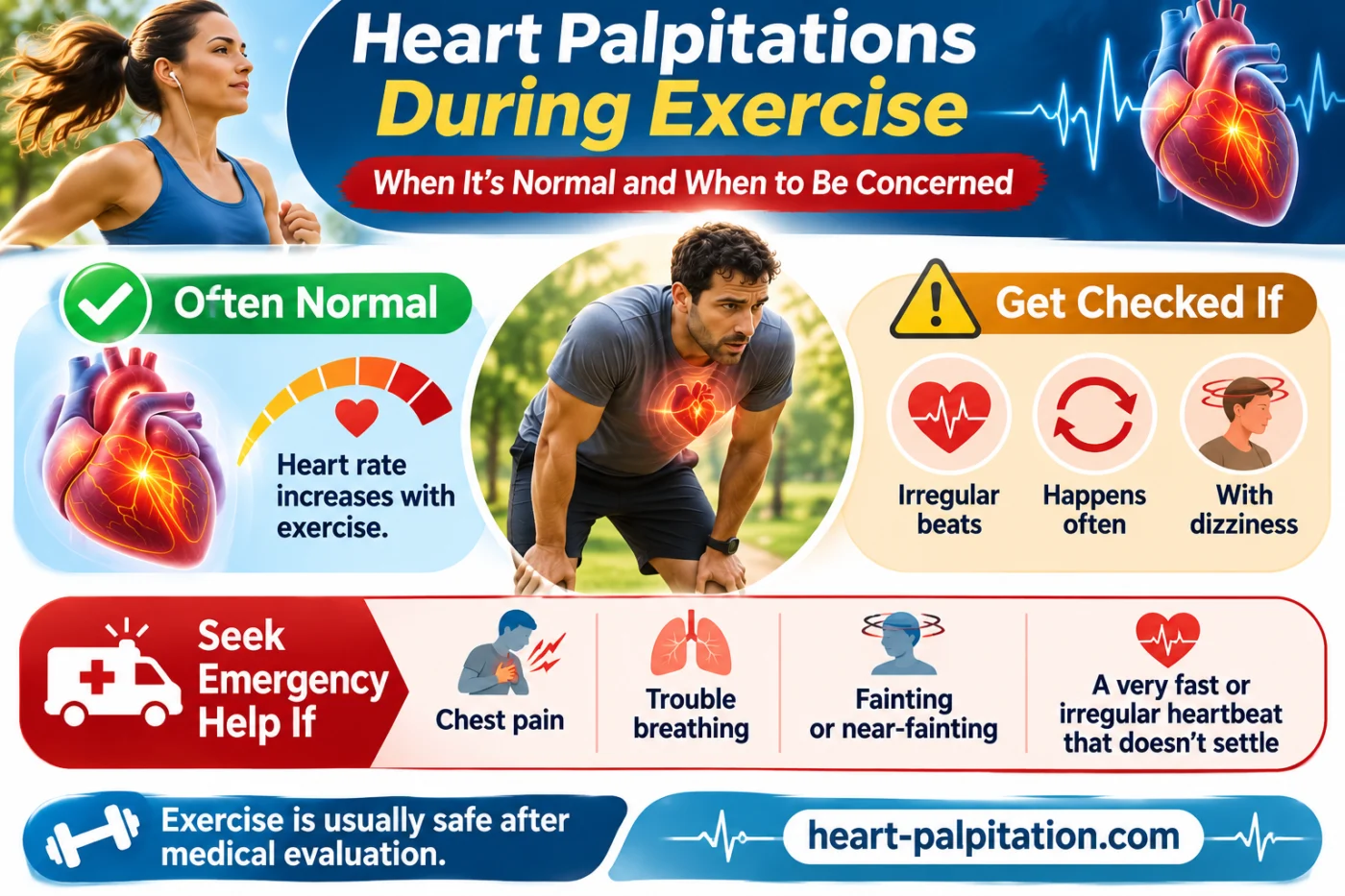
A faster heartbeat during exercise is usually a normal response to increased oxygen demand. However, new unexplained racing, irregular beats or palpitations accompanied by dizziness, chest pain or unusual breathlessness deserve medical assessment. Stop activity when symptoms occur; avoid strenuous exercise until concerning exertional episodes have been assessed. A normal resting ECG does not exclude an intermittent rhythm disorder.
Key Medical Takeaways
- A faster pulse with exertion can be normal, but a sudden unexplained or irregular rhythm requires attention.
- Stop activity if palpitations cause dizziness, chest symptoms or significant breathlessness.
- Recurrent exercise-related symptoms warrant clinical assessment even if a resting ECG is normal.
What is a normal exercise response?
During exercise, working muscles need more oxygen. Your nervous system increases the sinus node’s firing rate and the heart pumps more blood with each minute. The result is a faster, often more forceful heartbeat. This normal response is called sinus tachycardia, not an arrhythmia.
Typically, heart rate rises progressively as activity becomes harder and falls during recovery. Your pulse may feel prominent in your chest or neck, especially during running, climbing stairs or lifting weights. Feeling a strong beat does not by itself mean something is wrong.
Fitness, temperature, sleep, hydration and medications affect the response. Beta blockers can blunt the expected increase, while fever or dehydration may raise it. Generic smartwatch heart-rate targets cannot establish whether an episode is safe.
What about palpitations after exercise?
Adrenaline and temperature can remain elevated briefly after a workout. However, sudden, persistent or recurrent palpitations during recovery still deserve evaluation. See palpitations after exercise.
When are palpitations different from a normal fast pulse?
A gradual, regular rise with effort often represents the expected sinus response. A racing heartbeat that begins or ends abruptly may suggest supraventricular tachycardia (SVT). Premature atrial or ventricular beats can feel like a pause followed by a forceful thump. Atrial fibrillation can cause an irregular rhythm, although the sensations vary.
These clues are not diagnostic rules: SVT may feel regular and anxiety may begin suddenly. What matters is the rhythm actually recorded during symptoms, whether exertion reliably triggers episodes and whether you have chest discomfort, faintness or unusual breathlessness.
Write down whether the episode began like a switch or built gradually, whether the pulse seemed regular or irregular, how long it lasted and what happened when you stopped. Do not delay emergency care to take measurements.
| Feature | Often physiological | Worth assessing |
|---|---|---|
| Beginning | Gradual with effort | Sudden unexplained racing |
| Rhythm | Usually regular | Sustained irregularity or repeated skips |
| Associated symptoms | Expected exertional breathing | Chest pain, near-fainting, marked breathlessness |
Important: Symptoms offer clues but cannot confirm an arrhythmia or reliably exclude one.
Possible contributors
Heat, dehydration and exertion
Hot environments and fluid losses can make the heart work harder to maintain circulation. Dehydration may increase heart rate and contribute to lightheadedness. Even when these triggers seem likely, new palpitations during exercise should not automatically be dismissed.
Stimulants and recovery
Caffeine, energy drinks, pre-workout blends, nicotine, some decongestants and performance-enhancing substances may worsen palpitations in susceptible people. Poor sleep and inadequate recovery can also increase heartbeat awareness. Tell your clinician about supplements and medications rather than assuming they are harmless.
Medical conditions and rhythm disorders
Fever, iron-deficiency anemia, thyroid dysfunction and some electrolyte problems may contribute to a rapid heartbeat. SVT, frequent premature beats, atrial fibrillation and less common ventricular arrhythmias are additional possibilities. Known structural heart disease or a family history of sudden unexplained death increases concern.
Different ages and medical histories
In teenagers and athletes, exertional fainting or sudden racing should not be attributed solely to stress or energy drinks. In women, pregnancy, anemia and hormonal changes can coexist with rhythm problems. In older adults, atrial fibrillation, coronary disease and medicine effects become particularly relevant. Patients with heart failure, valve problems or inherited cardiac conditions need tailored evaluation.
What should you do when symptoms occur?
Stop and move to safety
Stop the workout, step away from machines, traffic or water and sit somewhere safe. If you feel faint, lie down to reduce the risk of falling. Tell a nearby person if you feel unwell. Do not continue lifting, sprinting or swimming through unexplained palpitations.
Check for warning signs
Call emergency services immediately if palpitations continue and will not settle or occur with chest pain or pressure, significant breathlessness, fainting, collapse or feeling close to fainting. Do not drive yourself. If those warning symptoms have stopped, obtain urgent medical assessment.
Record the episode and arrange appropriate follow-up
If stable, note the activity, exertion level, duration, whether onset was sudden and any dizziness or chest discomfort. A wearable ECG may sometimes help, but a normal reading does not exclude an arrhythmia. Avoid strenuous activity until unexplained exertional symptoms have been assessed.
For advice on exercising after evaluation, see Can You Exercise With Heart Palpitations?.
Which tests might be considered?
Doctors begin with an exercise and symptom history, examination and 12-lead ECG. Mention the precise activity, whether symptoms occurred at peak exertion or during recovery, medication and supplement use, and any family history of sudden cardiac death. A resting ECG may be normal even when intermittent arrhythmias occur.
Holter or longer ambulatory monitors may capture episodes. When symptoms appear specifically during exercise, a supervised exercise ECG or monitoring that mimics the relevant sport may help reveal the rhythm. The 2024 Heart Rhythm Society consensus emphasizes tailoring exertional testing to the activity that triggers symptoms.
An echocardiogram may be useful when structural heart disease is suspected, while blood count, thyroid function or electrolyte testing may be appropriate in selected patients. Testing should be matched to the person’s risk and findings, not ordered indiscriminately.
Learn more about palpitations despite a normal ECG and a normal Holter with recurring symptoms.
Emergency Warning Signs
Call your local emergency number now for palpitations that do not settle or occur with chest pain or pressure, significant breathlessness, fainting, collapse or feeling you may faint. Do not drive yourself. Warning symptoms that have stopped still warrant urgent assessment. Avoid strenuous exercise until medically evaluated.
Frequently Asked Questions
Is a fast pulse during exercise automatically palpitations?
No. A physiological increase in heart rate is normal; palpitations describe awareness of the heartbeat.
Should I continue my workout if I feel dizzy?
No. Stop, get to a safe position and seek appropriate assessment, urgently if symptoms are severe or accompanied by warning signs.
Related Guides
Palpitations after exercise · Palpitations and dizziness · Tests and diagnosis
Medical References
Educational information only; not a substitute for individualized medical advice.
Explore the full exercise guide: Heart Palpitations During and After Exercise.