
AFTER EATING & DIGESTION
Heart Palpitations After Eating Sugar or Carbohydrates
Some people notice palpitations after sweet or carbohydrate-heavy meals. Blood-glucose changes, stimulants, anxiety or a coincidental arrhythmia can be considered; sugar is not automatically the cause.
Written by: Dr. Albana Greca, MD, MMedSc, Family Physician, IDF Fellow
Medically reviewed by: Dr. Benard Shehu, MD, Cardiologist
Quick Answer
Some people notice palpitations after sweet or carbohydrate-heavy meals. Blood-glucose changes, stimulants, anxiety or a coincidental arrhythmia can be considered; sugar is not automatically the cause.
Key Medical Takeaways
- Palpitations are symptoms, not a specific heart-rhythm diagnosis.
- Repeated symptoms after meals deserve a careful history and sometimes rhythm recording.
- A symptom diary may help identify patterns.
- Chest pain, fainting or severe breathlessness require emergency assessment.
Can sugar cause heart palpitations?
Noticing a pounding or racing heartbeat after something sweet can be unsettling. Some people report this pattern, but the timing alone does not prove that sugar caused an abnormal heart rhythm. A palpitation is the sensation of your heartbeat; identifying an arrhythmia usually requires a heart recording.
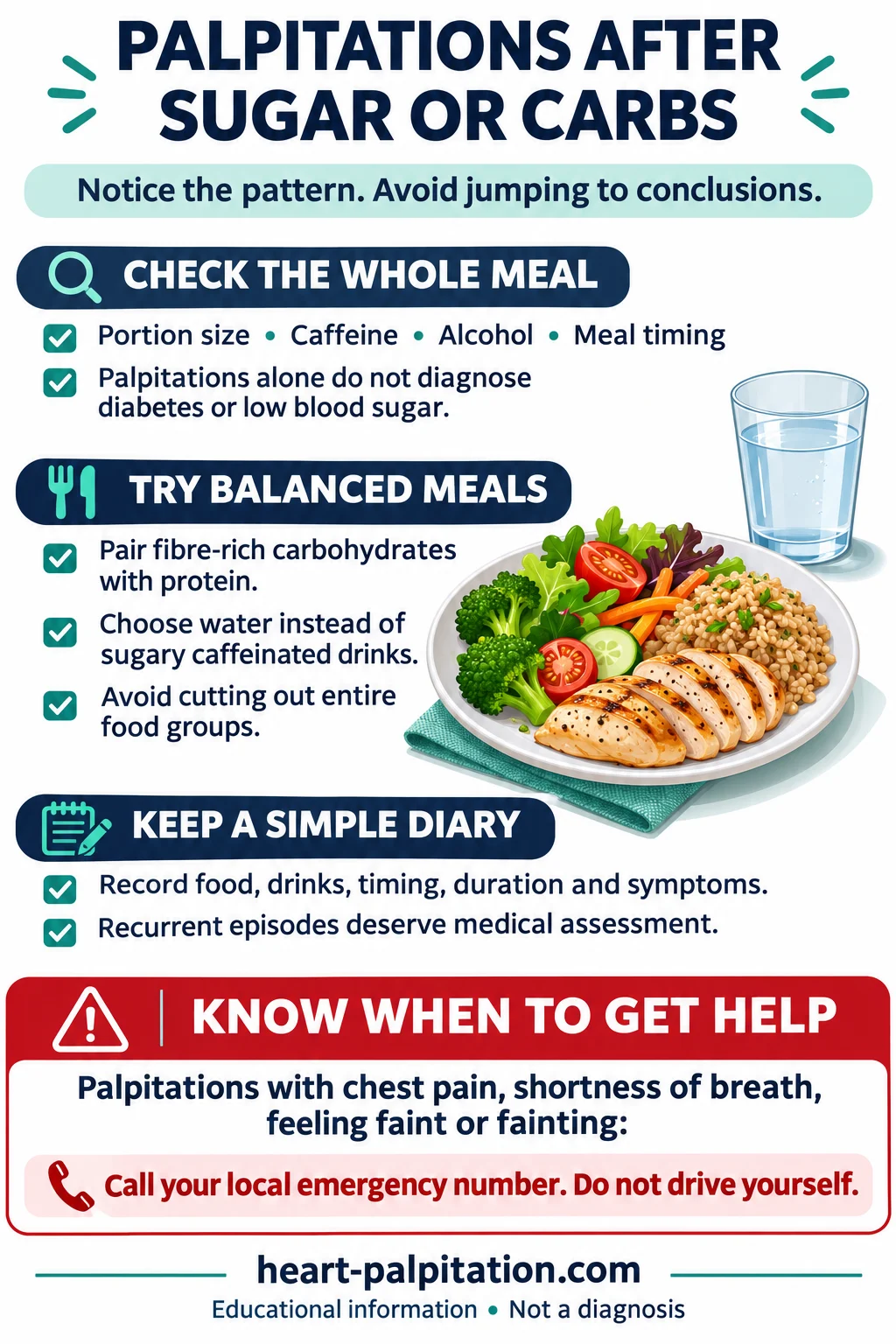
When we explore the episode, I want to know about the whole meal: how much you ate, what you drank, whether you had caffeine or alcohol, and how long afterward the symptoms began. A large dessert with coffee is a different situation from a small piece of fruit with lunch. Keeping those details helps us investigate without unnecessarily restricting your diet.
Please do not assume that you have damaged your heart because symptoms followed a sweet food. Equally, do not ignore recurrent episodes simply because you can link them to eating. New, prolonged or increasingly frequent palpitations deserve a medical assessment.
Blood sugar and heart rate
Low blood glucose can trigger the release of stress hormones, including adrenaline, which may make your heart race. Shaking, sweating, hunger, weakness or difficulty concentrating may occur too. This is especially relevant if you use insulin or medicines such as sulfonylureas that can cause hypoglycemia.
Low glucose that occurs after a meal is sometimes called reactive hypoglycemia, usually developing a few hours later. However, similar symptoms can happen without genuinely low glucose. In someone without diabetes, diagnosis requires symptoms occurring with a confirmed low blood glucose level and improvement when glucose returns to normal; a “sugar crash” sensation alone is not enough.
If you have diabetes and suspect a hypo, check your glucose if possible and follow your established treatment plan. For many people with diabetes, a reading below 70 mg/dL (3.9 mmol/L) is a treatment threshold. If you are awake and can swallow safely, the usual approach is 15–20 grams of fast-acting carbohydrate, checking again after 15 minutes and repeating if still low. Severe confusion, seizures or inability to swallow need emergency help; never give food or drink to someone who cannot swallow safely.
Why carbohydrates might seem to trigger symptoms
The type and amount of food may matter, but carbohydrates are not a single uniform group. A large sugary drink is different from oats, lentils or whole fruit. If symptoms consistently follow large portions or sweet drinks, a trial of smaller, balanced meals may be helpful while you arrange assessment for recurring symptoms.
Other ingredients can be overlooked. Sweet coffee, cola and energy drinks may contain caffeine; alcohol can also contribute to palpitations. Note the drink, portion and ingredients rather than blaming sugar alone. Bloating or reflux may accompany meals, but digestive discomfort does not prove that your heartbeat is harmless or explain away warning signs.
Tell your doctor if you have had stomach, esophageal or bariatric surgery. Dumping syndrome can cause a fast heartbeat, sweating and digestive symptoms soon after eating, while later episodes may involve low glucose. This is a specific clinical situation needing assessment and tailored advice, rather than a diagnosis to apply to everyone who feels unwell after sweets.
Should I stop eating carbohydrates?
You usually do not need to remove all carbohydrates because of palpitations. A more practical starting point is to limit large amounts of added sugar and choose balanced meals with fibre-rich carbohydrates, protein and vegetables. For example, try oats with plain yogurt and nuts, or a modest portion of whole grains with beans, fish or chicken and vegetables.
If large meals seem to precede symptoms, try smaller portions and spread your food more evenly through the day. Choose water instead of sugary caffeinated drinks, and change one habit at a time so that you can see whether it helps. A dietitian can adapt the plan if symptoms, weight concerns or other medical conditions make eating difficult.
If you use insulin or another medicine that can cause low glucose, discuss substantial changes in carbohydrate intake with your diabetes team. Skipping meals or sharply reducing carbohydrates without a medication plan can increase the risk of hypoglycemia. Fast-acting sugar remains an appropriate treatment for a hypo even when you are limiting added sugar in everyday meals.
When might tests be useful?
Assessment is useful when episodes keep returning, last longer than a few minutes, become more frequent or affect your daily life. Your clinician will ask about timing, associated symptoms, medicines and family history, and may arrange an ECG. A normal ECG between episodes may not capture an intermittent rhythm disturbance.
A portable monitor can help match your symptoms with your heart rhythm. Depending on the history and examination, blood tests may assess anemia, thyroid function, electrolytes or glucose. Diabetes testing, when indicated, uses established tests such as HbA1c or fasting plasma glucose rather than the presence of palpitations after sweets.
Bring a simple diary showing food and drinks, time of onset, duration and accompanying symptoms. Existing glucose or smartwatch records may help, but a consumer device cannot settle every diagnostic question. A clinician should decide how to confirm suspected low glucose; do not deliberately provoke symptoms with a large sugar intake or change medicines to test a theory.
When to Seek Emergency Help
Call your local emergency number if you currently have palpitations with chest pain, shortness of breath, feeling faint or fainting. Do not drive yourself. Do not assume these symptoms are simply a reaction to sugar, reflux or anxiety, and do not delay care to check your glucose or pulse.
If these warning symptoms have stopped, arrange an urgent medical assessment. A previous normal heart test does not rule out a new problem. Someone who is unconscious, having a seizure or unable to swallow safely needs emergency help; do not give them food or drink.
Frequently Asked Questions
Do palpitations after sweets mean diabetes?
Palpitations after sweets do not, by themselves, mean that you have diabetes. Several different problems can produce a similar heartbeat sensation, and diabetes is diagnosed using blood tests.
If you also have increased thirst, frequent urination, unexplained weight loss or risk factors for diabetes, discuss testing with your doctor. We can investigate your glucose and your heartbeat as appropriate without assuming that one explains the other.
Can low blood sugar make my heart race?
Low blood sugar can make your heart race because your body releases hormones that help raise glucose. You may also feel shaky, sweaty, hungry or weak. These symptoms need particular attention if you take insulin or another medicine that can cause hypoglycemia.
Follow your diabetes hypo plan if this applies to you. If you do not have diabetes but repeatedly develop these symptoms, seek assessment rather than repeatedly treating an assumed low with sweets. Confirming what happens during an episode helps us choose the right treatment.
Can a sugary drink contain another trigger?
A sweet drink can contain caffeine or other stimulant ingredients as well as sugar. Coffee-based drinks, colas and energy drinks are examples worth checking when you keep a symptom diary.
Try noting the brand, serving size and caffeine content, and consider a caffeine-free alternative. Improvement after a change can reveal a useful pattern, but persistent palpitations still deserve assessment, and warning symptoms need urgent help.
Related Reading
References
- Cleveland Clinic: Heart Palpitations After Eating.
- NICE guideline NG196: Atrial fibrillation.
- NHS: Heart palpitations.
- NIDDK: Low Blood Glucose (Hypoglycemia).
- Endocrine Society: Evaluation and Management of Adult Hypoglycemic Disorders.
- NIDDK: Symptoms and Causes of Dumping Syndrome.
- North Tees and Hartlepool NHS: Dietary advice for reactive hypoglycaemia.
- NHLBI: Arrhythmias—Diagnosis.
This article provides general health information, not individualized diagnosis or treatment.
Related guide: Heart Palpitations After Eating: Digestive Causes & Symptoms.