
AFTER EATING & DIGESTION
Heart Palpitations After a Large Meal: Why It Happens
A large meal can make the heartbeat feel stronger or faster, but the sensation alone cannot distinguish normal heart-rate changes from an arrhythmia.
Written by: Dr. Albana Greca, MD, MMedSc, Family Physician, IDF Fellow
Medically reviewed by: Dr. Benard Shehu, MD, Cardiologist
Quick Answer
A large meal can make the heartbeat feel stronger or faster, but the sensation alone cannot distinguish normal heart-rate changes from an arrhythmia.
Key Medical Takeaways
- Palpitations are symptoms, not a specific heart-rhythm diagnosis.
- Repeated symptoms after meals deserve a careful history and sometimes rhythm recording.
- A symptom diary may help identify patterns.
- Chest pain, fainting or severe breathlessness require emergency assessment.
Why can a large meal make my heart pound?
A large meal can make your heartbeat feel stronger or faster as your body adjusts circulation for digestion. You may also notice your heartbeat more when you sit quietly afterward. A forceful heartbeat can feel alarming, but the sensation alone does not tell us whether your rhythm is normal or abnormal.
Stomach fullness, bloating and acid reflux may occur at the same time and make sensations in your chest more noticeable. However, it is not safe to assume that your stomach is “pressing on your heart” or that gas explains every skipped beat. Digestive symptoms and a heart rhythm problem can coexist.
When you describe an episode, tell me whether the heartbeat builds gradually or starts suddenly, whether it feels regular, and how long it lasts. Include any dizziness, chest discomfort or breathing difficulty. Those details are more useful than the meal connection alone and help us choose the right assessment.
Common contributing factors
Consider the whole meal rather than just its size. Coffee, energy drinks and alcohol can contribute to palpitations in some people. A rich or spicy meal may worsen reflux, while dehydration, poor sleep or anxiety may also be present. These are possible contributors to investigate rather than reasons to dismiss symptoms.
A drop in blood pressure after eating, called postprandial hypotension, is another possibility, particularly in older adults and people with certain underlying conditions. It can cause lightheadedness, weakness or fainting after meals. If you feel unwell rather than simply aware of your heartbeat, tell your doctor; blood pressure measurements around meals may help clarify the pattern.
Medicines and supplements also matter. Mention anything you take with dinner, including inhalers, decongestants, thyroid medication and products marketed for energy or weight loss. Do not stop treatment yourself. Your clinician or pharmacist can review whether the medicine, dose or timing could contribute.
Does a large meal cause atrial fibrillation?
Palpitations after eating do not establish that you have atrial fibrillation, or AF. AF is a specific abnormal rhythm that needs ECG evidence. A pounding heartbeat can occur with a normal rhythm, extra beats or several different arrhythmias, so neither meal size nor the sensation alone can identify it.
If an irregular pulse is found and AF is suspected, a clinician usually arranges a 12-lead ECG. When episodes come and go, a longer recording may be needed. A Holter, patch or event monitor can help capture the rhythm when you actually have symptoms, with the monitoring period chosen to suit how often they occur.
If you already have AF, keep following your agreed treatment plan and tell your clinician about a new pattern after meals. Alcohol, especially heavy drinking, is an established AF risk factor and may accompany a large dinner. Do not take extra heart medication or alter anticoagulants because of a meal-related episode unless your clinician has specifically instructed you to do so.
What can I do safely?
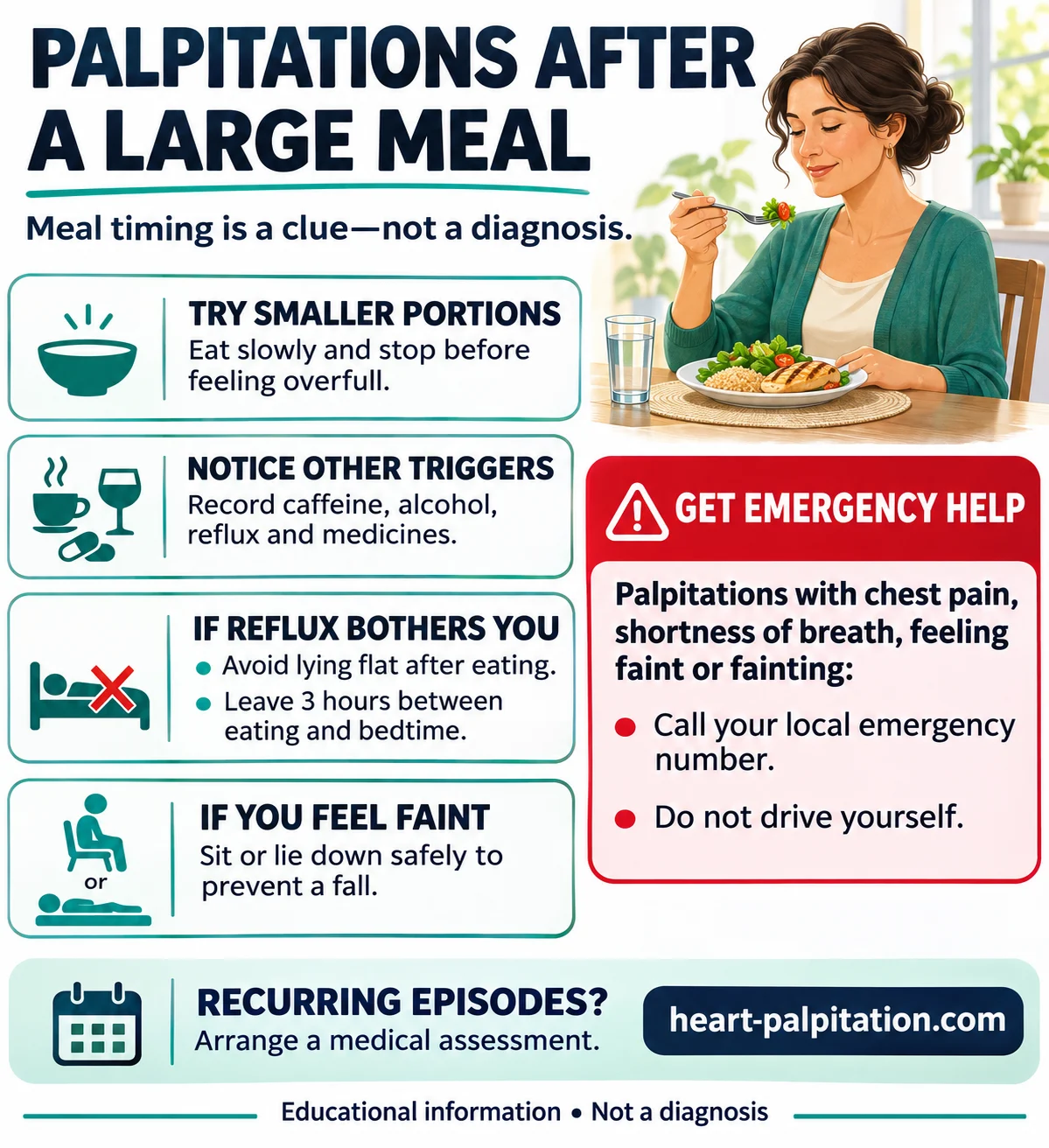
Start with a comfortable portion, eat slowly and pause before having more. If very large meals repeatedly precede symptoms, try spreading the same overall food intake across smaller meals rather than skipping food and becoming overly hungry. Avoid removing whole food groups without a clear reason, and record whether the change actually helps.
If reflux accompanies the episodes, remain upright after eating and aim to finish meals at least three hours before lying down or going to bed. Reduce only the foods or drinks that consistently worsen your reflux. These measures may improve digestive symptoms; they do not prove that any associated palpitations are harmless.
If you become dizzy, stop activity and sit or lie down safely to prevent a fall; preventing collapse takes priority over reflux posture advice. Palpitations with current faintness, chest pain or breathlessness need emergency help. Otherwise, hydrate appropriately within any prescribed fluid limit, and avoid starting potassium or magnesium supplements or changing medicines without advice.
When should I be checked?
Arrange a medical assessment if episodes are new, keep returning, last longer than a few minutes, become more frequent or disrupt your activities. Mention known heart disease, symptoms during exertion or a family history of sudden unexplained death. You do not need to wait until an episode becomes severe before seeking advice.
Your doctor may examine you and arrange an ECG, then choose further tests according to the findings. Blood tests may investigate anemia, thyroid disease or electrolyte problems. Portable rhythm monitoring may be useful if symptoms are intermittent, and blood pressure assessment may help if meals are followed by lightheadedness.
Bring a short diary of portion size, drinks, medicines, timing, duration and associated symptoms. Save an existing smartwatch ECG if you have one, but do not delay help while trying to obtain a recording. I want us to find a practical explanation and plan, rather than leave you afraid of eating or repeatedly checking your pulse without answers.
When to Seek Emergency Help
Call your local emergency number for current palpitations with chest pain, shortness of breath, feeling faint or fainting. Do not drive yourself. Do not wait to see whether burping, an antacid or resting after dinner makes the symptoms disappear.
If those warning symptoms have completely stopped, arrange an urgent medical assessment. A previous normal ECG or a history of reflux does not rule out a new heart problem. Collapse or loss of normal responsiveness also requires emergency help.
Frequently Asked Questions
Is a racing heart after a large dinner normal?
A modest increase in heart rate can accompany digestion, and a heartbeat may be more noticeable when you rest afterward. However, a very fast, irregular, persistent or repeatedly troublesome heartbeat should not automatically be labelled a normal response to dinner.
Tell your clinician whether this happens only after very large meals or also after small meals, during exercise or at rest. If it occurs with chest pain, shortness of breath or feeling faint, seek emergency help rather than waiting for digestion to finish.
Should I avoid eating late?
Earlier, smaller dinners may help if eating late consistently brings on reflux or uncomfortable fullness. For reflux that worsens when lying down, leave at least three hours between eating and bedtime where possible.
If work or family routines make an early dinner difficult, try a smaller evening portion and avoid lying flat immediately afterward. There is no single dinner time that prevents every palpitation. Continued or worsening episodes still need medical assessment even if changing your schedule improves some symptoms.
Related Reading
References
This article provides general health information, not individualized diagnosis or treatment.
Related guide: Heart Palpitations After Eating: Digestive Causes & Symptoms.