
DIZZINESS & BLOOD PRESSURE
Heart Palpitations and Low Blood Pressure: Causes and Warning Signs
Palpitations with low blood pressure can occur with dehydration, blood loss, medication effects or an abnormal heart rhythm. The combination deserves particular attention when dizziness or fainting occurs.
Written by: Dr. Albana Greca, MD, MMedSc, Family Physician, IDF Fellow
Medically reviewed by: Dr. Benard Shehu, Cardiologist.
Quick Answer
Palpitations with low blood pressure can occur with dehydration, blood loss, medication effects or an abnormal heart rhythm. The combination deserves particular attention when dizziness or fainting occurs.
Key Medical Takeaways
- Palpitations describe a sensation; ECG evidence is needed to identify an arrhythmia.
- Near-fainting, low blood pressure or shortness of breath changes how urgently symptoms should be assessed.
- Repeated episodes can require rhythm monitoring even after a normal resting ECG.
What counts as low blood pressure?
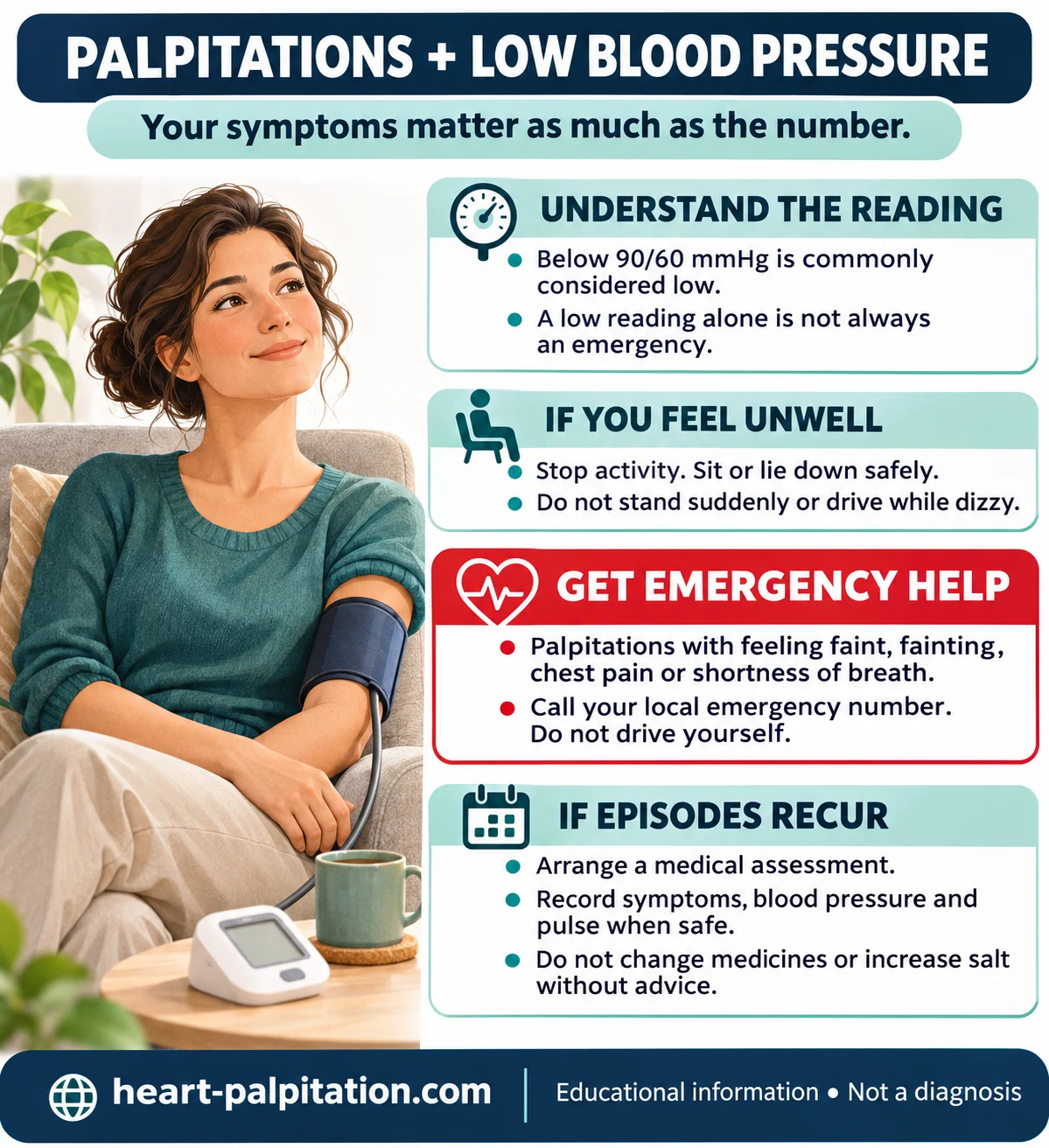
Blood pressure below 90/60 mmHg is commonly described as low blood pressure, or hypotension. However, a lower reading does not automatically mean something is wrong. Some people naturally have low blood pressure and feel completely well. What matters is whether the reading is usual for you and whether you have symptoms alongside it.
When you tell me about a low reading, I also want to know how you felt: were you comfortable, or did you feel weak, lightheaded, confused or close to passing out? A sudden fall from your usual pressure can be important even if the monitor does not show a number below 90/60. Please share the symptoms and the circumstances, rather than judging the episode by the number alone.
Why can low blood pressure cause a racing heartbeat?
Your body continuously adjusts your circulation to keep blood flowing to your brain and other organs. When blood pressure falls, your heart may speed up to help compensate. You may notice this as racing, pounding or unusually strong heartbeats. This response can happen when you are dehydrated or have lost fluid through illness or heavy sweating.
The relationship can also work in the other direction: a heart rhythm problem may reduce how effectively the heart pumps and cause blood pressure to fall. Certain medicines and significant blood loss are other possible explanations. Feeling a fast heartbeat does not tell us which mechanism is responsible, so new or recurrent symptoms deserve assessment.
Tell your doctor what happened first, if you can remember: did you become dizzy before noticing the racing, or did the heartbeat change suddenly before you felt unwell? You do not need to get every detail right. Your description helps guide the assessment, while an ECG or longer rhythm recording may be needed to identify an arrhythmia.
What if my blood pressure drops when I stand?
If you become lightheaded, weak or develop blurred vision after getting out of bed or standing from a chair, you may have postural, or orthostatic, hypotension. This means your blood pressure falls when you become upright. It can cause a fall or blackout, so please do not dismiss repeated episodes as simply “getting up too quickly.”
A clinician can compare your blood pressure while lying down and after standing. A fall of at least 20 mmHg in the upper number or 10 mmHg in the lower number supports the diagnosis in the appropriate setting. Timing and technique matter; NICE recommends checking again after standing for at least one minute. Avoid deliberately provoking an episode at home if you might fall.
For everyday prevention, move gradually from lying to sitting, pause, and then stand with support nearby. Heat, prolonged standing and large meals may worsen symptoms in some people. Recurrent symptoms need a review of possible causes and medicines, even if you have learned how to avoid some triggers.
What should I do during an episode?
Stop your activity and sit or lie down somewhere safe. Do not try to walk through significant dizziness or stand repeatedly to check whether it has passed. If palpitations occur with feeling faint, fainting, chest pain or shortness of breath, call your local emergency number and do not drive yourself. If those symptoms have stopped, arrange an urgent medical assessment.
For a mild episode without warning signs, once you are safely seated and fully alert, drinking some water may help if dehydration is contributing. Follow any fluid restriction already prescribed for heart or kidney disease. Do not use extra salt, energy drinks or changes to your medicines as a quick treatment without medical advice.
If it is safe, record your blood pressure, pulse, symptoms and the time the episode occurred. Note whether you had just stood up, eaten, exercised or taken medication. Please do not delay seeking help to obtain a reading; the symptoms themselves may be enough to require urgent care.
Which tests might a clinician recommend?
The first step is understanding the pattern. Your clinician will ask about your usual readings, symptoms, recent illness, fluid loss and medicines, then examine you. Blood pressure measurements in different positions may help identify a postural drop, while an ECG checks your heart’s electrical activity.
Further tests depend on what the assessment suggests. Blood tests may investigate anemia, electrolyte disturbances, kidney function or thyroid problems. If palpitations happen intermittently, a portable heart monitor may help connect your symptoms with your rhythm. Some people need additional investigation for recurrent fainting or suspected heart disease.
You do not automatically need every test available. Ask your clinician what each proposed test is looking for and what the next step will be if it is normal. The aim is to explain your symptoms and choose treatment that addresses their cause.
Emergency Warning Signs
Seek emergency help for palpitations with feeling faint, fainting, chest pain or shortness of breath. Do not wait for your blood pressure to fall below a particular number. If these symptoms have resolved, you still need urgent medical assessment.
Confusion, cold clammy skin, rapid breathing or a weak, rapid pulse can indicate dangerously impaired circulation. Significant bleeding or black, tar-like stools also require urgent attention, particularly with weakness or dizziness. Call emergency services if the person is collapsing or seriously unwell.
Frequently Asked Questions
Can dehydration cause low blood pressure and palpitations?
Dehydration can reduce circulating blood volume, allowing blood pressure to fall while the heart speeds up to compensate. This may happen after vomiting, diarrhea, heavy sweating or inadequate fluid intake. However, dehydration is one possible explanation rather than a diagnosis you can confirm from these symptoms alone.
If symptoms keep returning despite drinking normally, arrange an assessment. Seek help sooner if you cannot keep fluids down or feel increasingly unwell. Palpitations with faintness or other emergency warning signs should not be managed by simply drinking water and waiting.
Does a reading of 90/60 always mean danger?
A reading of 90/60 mmHg does not automatically mean danger, particularly if it is normal for you and you feel well. An isolated lower reading needs to be interpreted alongside your symptoms and usual blood pressure.
If you feel well, keep a record and discuss persistently unusual readings with your clinician. If you feel faint, confused or markedly weak, the priority is assessing those symptoms. Please do not let a number that looks “only slightly low” persuade you to ignore how unwell you feel.
Can blood-pressure medication contribute?
Blood-pressure medicines can sometimes contribute to low readings or dizziness, particularly after a dose change or during an illness that causes dehydration. Diuretics increase fluid loss, while other medicines lower pressure through different mechanisms. Your clinician should also review other prescriptions and substances that may contribute.
Please contact your prescriber rather than stopping or reducing treatment yourself. Bring your medication list, readings and a note of when symptoms occur. We can then consider whether the dose, timing or treatment needs adjusting while continuing to protect your health.
Related Guides
Dizziness and Palpitations · Blood Pressure and Palpitations · Palpitations When Standing · Heart Rhythm Tests
Medical References
- AAFP: Orthostatic Hypotension — A Practical Approach.
- NICE: Transient loss of consciousness in over 16s (CG109).
- NICE: Atrial fibrillation (NG196).
- NHS: Low blood pressure.
- NHS: Heart palpitations.
- NICE: Hypertension in adults—Postural hypotension recommendations.
- NHLBI: Low Blood Pressure.
- NHLBI: Arrhythmias—Diagnosis.
- Cambridge University Hospitals: Postural hypotension.
Medical disclaimer: This page provides educational information, not an individualized diagnosis.
Explore related symptoms: Heart Palpitations, Dizziness & Blood Pressure — Guide.