
DIZZINESS & BLOOD PRESSURE
Heart Palpitations and Feeling Faint: When Is It Serious?
Feeling faint with palpitations is more concerning than noticing a heartbeat alone because it can reflect reduced blood flow to the brain. Prompt medical assessment is important, especially if episodes are recurrent or sudden.
Written by: Dr. Albana Greca, MD, MMedSc, Family Physician, IDF Fellow
Medically reviewed by: Dr. Benard Shehu, Cardiologist.
Quick Answer
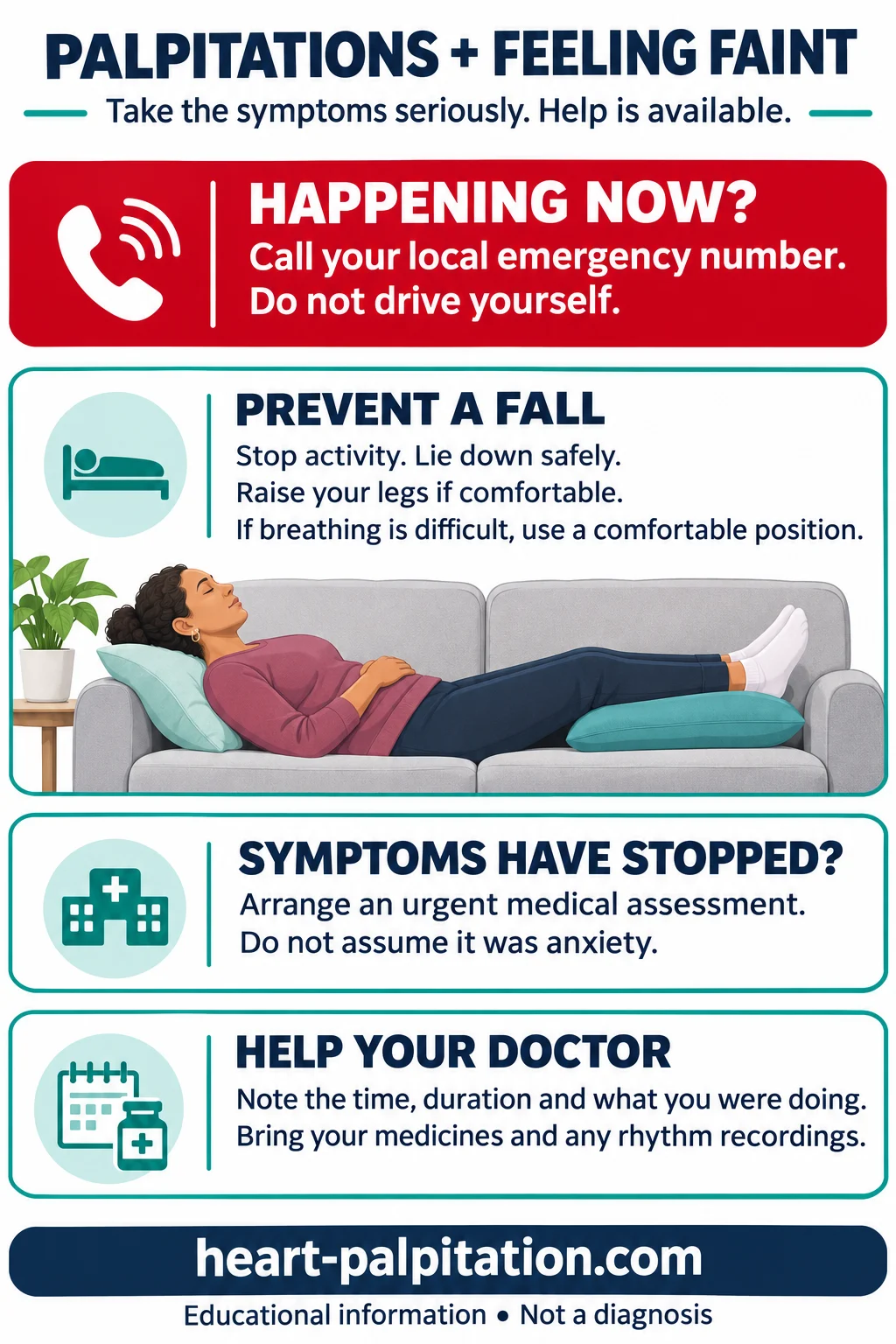
Palpitations with a current feeling of faintness need emergency assessment. Call your local emergency number and do not drive yourself. If the symptoms have stopped, arrange an urgent medical assessment. Possible causes include a blood pressure drop, a vasovagal response and an abnormal heart rhythm; symptoms alone cannot identify the cause.
Key Medical Takeaways
- Palpitations describe a sensation; ECG evidence is needed to identify an arrhythmia.
- Near-fainting, low blood pressure or shortness of breath changes how urgently symptoms should be assessed.
- Repeated episodes can require rhythm monitoring even after a normal resting ECG.
What does feeling faint mean?
Feeling faint means you feel as though you might lose consciousness, even if you remain awake. Doctors call this presyncope. You may notice your vision becoming dim, sounds seeming distant, cold sweating, nausea or a sudden weakness that makes you need to sit down. These warning symptoms matter, particularly when they happen alongside an unusual heartbeat.
When speaking with your doctor, describe the sensation in your own words. “The room was spinning” is different from “my vision went dark and I thought I would pass out.” Both deserve attention, but they can lead us toward different explanations. Also explain whether you actually lost consciousness, fell or needed someone to support you.
I want you to feel comfortable reporting an episode even if it was brief or difficult to explain. You do not need to identify its cause before asking for help. What you felt, what you were doing and how you recovered are useful starting points for your assessment.
Why might palpitations and near-fainting occur together?
Your brain needs a steady blood supply to keep you alert. Some abnormal heart rhythms make the heart beat too quickly, too slowly or unevenly enough to affect circulation. This can produce palpitations together with weakness, dimming vision or near-fainting. However, feeling these symptoms does not by itself confirm that you have an arrhythmia.
A fall in blood pressure can also make you feel faint, especially after standing up. Dehydration, heat and certain medicines may contribute. A vasovagal episode—a reflex response sometimes triggered by pain, distress or prolonged standing—can cause blood pressure and sometimes heart rate to fall. Warmth, nausea and sweating before the episode can provide clues, but they do not establish the diagnosis on their own.
Other possibilities depend on your health and circumstances. For example, low blood glucose can cause sweating, shaking, a fast heartbeat and lightheadedness, particularly in people taking medicines that can cause hypoglycemia. Tell your doctor about your diabetes treatment, recent illness, fluid intake and any medicine changes. Please do not stop prescribed treatment yourself; a medication review can help identify a safer adjustment when needed.
When is it an emergency?
If you currently have palpitations and feel faint or think you may pass out, call your local emergency number. Do not drive yourself. You do not need to wait for chest pain or actual loss of consciousness before seeking help. If the symptoms have completely stopped, arrange an urgent medical assessment rather than waiting for a routine appointment.
Fainting during exercise or while lying down is particularly concerning. Emergency help is also needed if someone does not recover promptly, has difficulty speaking or moving, has breathing problems or suffers a serious injury. Tell the assessing clinician about known heart disease or a family history of sudden unexplained death, especially at a young age, because this can change the urgency of further investigation.
I understand that calling for help can feel like a big step when you are unsure what is happening. With this combination of symptoms, seeking help is a reasonable response. The aim is to identify anyone who needs immediate treatment and help you understand what happened.
What should I do immediately?
Stop what you are doing and protect yourself from falling. Lie down somewhere safe and raise your legs if comfortable. If breathing is difficult, use a position that makes breathing easier. If you cannot lie down, sit down immediately. Ask someone nearby to stay with you and help call emergency services when palpitations and faintness are happening together. Do not try to walk around to “shake it off.”
Your immediate priority is getting help, not collecting measurements. If information is already available—such as a smartwatch recording or the time the episode began—keep it for the clinician. Once you are safe, note how long the symptoms lasted, what you were doing and whether you lost consciousness. These details can help your doctor connect the symptoms with a possible cause.
How do doctors investigate it?
We begin by listening carefully to your description. Did the racing heartbeat start before the faint feeling? Were you standing, exercising or resting? Did you have warning symptoms, and how quickly did you recover? Your doctor will also ask about previous episodes, medicines and family history, then examine you and usually arrange a 12-lead ECG. Blood pressure measurements while lying and standing may be appropriate.
Further testing should answer a specific clinical question. Blood tests may look for anemia, glucose problems, electrolyte disturbances or thyroid disease when the history suggests these possibilities. An echocardiogram may be appropriate if examination or other findings suggest a structural heart problem. You do not automatically need every available test; the choice depends on your symptoms and initial assessment.
If the episodes come and go, a longer heart recording may help. A Holter monitor, patch monitor, event recorder or occasionally an implantable loop recorder can capture information outside the clinic. The most useful recording links what you felt with your heart rhythm at that moment. Monitoring duration should reflect how often your symptoms occur.
Emergency Warning Signs
Call local emergency services for palpitations with feeling faint, fainting, chest pain, severe breathlessness, collapse or severe ongoing dizziness. Do not drive yourself.
Frequently Asked Questions
Are palpitations with near-fainting always dangerous?
Palpitations with near-fainting are not always dangerous, as some episodes have treatable causes such as a drop in blood pressure or a vasovagal response. Nevertheless, a potentially serious rhythm problem can produce similar symptoms, so we cannot safely decide the cause simply from how frightening—or how brief—the episode felt.
My advice is to take the symptoms seriously while leaving room for a reassuring explanation. Seek emergency help if the combination is happening now, and urgent assessment if it has stopped. An assessment gives us a basis for reassurance and a plan for what to do if symptoms return.
What if the ECG is normal afterward?
A normal ECG provides useful information about your heart during the recording. However, a rhythm disturbance that has already stopped may not appear on that brief test. Your doctor may therefore recommend a portable monitor when symptoms occur intermittently outside the appointment.
Tell your doctor if you continue to feel faint, even after an initially reassuring assessment. Keep a simple record of episodes and ask what follow-up is appropriate. A normal result should be interpreted alongside your symptoms, examination and medical history; it should not discourage you from reporting another episode.
Can anxiety cause a faint feeling?
Anxiety can cause palpitations, and the sensation of an unusual heartbeat can itself make you feel frightened. But anxiety can also occur during a heart rhythm disturbance. Feeling anxious therefore does not, by itself, explain why your heart is racing or why you feel close to passing out.
Please do not feel that you must choose between discussing your emotional wellbeing and having your physical symptoms assessed. Both deserve attention. If medical assessment supports anxiety as a contributor, we can discuss ways to manage it. Current palpitations with faintness still require emergency assessment, whatever your previous experience with anxiety.
Related Guides
Dizziness and Palpitations · Blood Pressure and Palpitations · Palpitations When Standing · Heart Rhythm Tests
Medical References
Medical disclaimer: This page provides educational information, not an individualized diagnosis.
Explore related symptoms: Heart Palpitations, Dizziness & Blood Pressure — Guide.