
Key Medical Takeaways
- Palpitations can happen around hot flashes or at night. Timing can help your clinician evaluate them.
- Book an appointment if episodes recur, become more frequent, or last more than a few minutes and then stop.
- Call emergency services if palpitations will not stop, or happen with chest pain, trouble breathing, fainting or feeling about to faint.
Written by Dr. Albana Greca, MD, MMedSc, Family Physician, IDF Fellow
Cardiology specialist profile Dr. Benard Shehu. Independent medical review pending.
Quick Answer
During perimenopause, you might feel your heart pound, flutter or skip. You may notice it during a hot flash, after waking in a sweat, or on a day when you have had little sleep. Tell your clinician if it keeps happening. Thyroid problems, iron deficiency, medicines and intermittent heart rhythm problems can cause similar sensations.
When to Get Emergency Help
Call your local emergency number now if your palpitations continue without stopping, or if they come with chest pain, shortness of breath, fainting or feeling as though you might pass out. Do not drive yourself. If the warning symptoms have fully stopped, seek urgent medical assessment today.
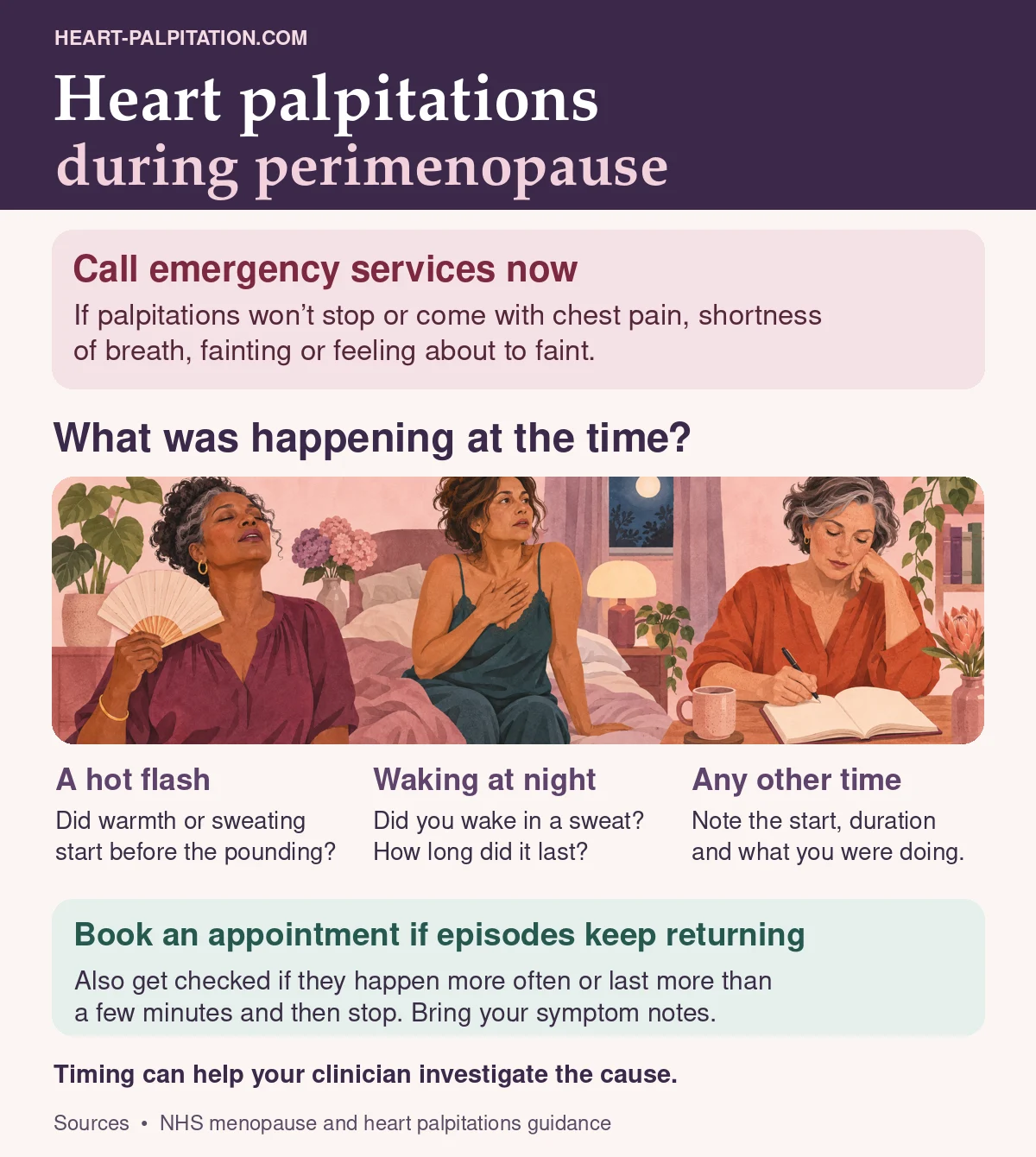
Read the infographic as text
- Emergency. Call emergency services if palpitations will not stop or come with chest pain, shortness of breath, fainting or feeling about to faint.
- During a hot flash. Note if warmth or sweating started before the pounding.
- Waking at night. Note if you woke in a sweat and how long the palpitations lasted.
- At other times. Note the start, duration and what you were doing.
- Book an appointment if episodes keep returning, happen more often or last more than a few minutes and then stop. Bring your symptom notes.
Why Can Palpitations Occur During Perimenopause?
Perimenopause is the transition leading up to menopause. Hormone levels fluctuate, and changes in your periods, hot flashes and sleep can occur over the same stretch of time. A heartbeat that usually goes unnoticed may feel forceful when you wake suddenly, feel warm or are lying quietly.
In a consultation, I ask how the episode began and ended, whether it felt regular and what you were doing. A brief thump when you wake up and a sudden racing rhythm that happens during a walk are different patterns. If episodes are new, recurring or happening with exertion, tell your clinician rather than assuming they are part of the transition.
How Do Hot Flashes and Palpitations Relate?
You might first feel heat in your face or chest, then sweat and notice a pounding heartbeat. At night, you may wake up warm with a damp shirt and only then become aware of your heart. Make a note of whether the heartbeat settles as the warmth passes.
Also note episodes that happen without a hot flash, start and stop abruptly, or feel markedly irregular. Two sensations can occur together for different reasons. If the episodes repeat, a rhythm recording while you feel them can help clarify what is happening.
What Other Conditions Should Be Considered?
If your periods have become heavier and you also feel tired or winded with everyday activities, mention the bleeding. Your clinician may check for anemia or low iron. A racing heartbeat alongside tremor or unexplained weight loss can be a reason to check thyroid function.
Make a list of recent changes in medicines and supplements, including decongestants, asthma inhalers or thyroid medicines. Bring any record of your pulse or smartwatch ECG, if available. A watch reading can give your clinician a clue, and an intermittent rhythm problem can still occur when the watch shows a normal reading.
When Are Tests Useful?
A clinician may check your pulse and blood pressure and do a 12-lead ECG. If symptoms come and go, a normal ECG between episodes can miss the rhythm at the moment you feel it. A Holter, patch or event monitor may help match the heartbeat tracing to your symptom diary.
Blood tests are chosen based on your history, such as a blood count if bleeding is heavy or thyroid tests if symptoms suggest an overactive thyroid. In otherwise healthy people aged 45 or older with typical menopause symptoms, NICE generally recommends identifying perimenopause from symptoms and period changes without routine hormone testing. Tests for the palpitations serve a separate purpose.
What Can Help?
For an episode that settles and leaves you feeling well, write down the start time, duration, activity, and any hot flash or night sweat. Include where you are in your cycle if your periods are still coming. Note caffeine, alcohol, medicines and anything that makes symptoms worse. Call for help first if there are emergency signs.
If hot flashes or disrupted sleep are affecting daily life, discuss menopause treatment with your clinician. Evidence for hormone therapy specifically as a treatment for palpitations is limited. If hormone therapy is being considered for menopause symptoms, the decision depends on your personal benefits and risks, alongside assessment of the palpitations.
Frequently Asked Questions
Can perimenopause make my heart race at night?
Some people notice pounding or racing when they wake with a night sweat. Write down whether the heartbeat settles after the sweating passes. Repeated episodes deserve assessment, especially if they also happen without night sweats.
Should I take estrogen to stop palpitations?
Discuss your symptoms with a clinician first. Hormone therapy may be an option for bothersome menopause symptoms, and evidence for using it specifically to treat palpitations is limited.
Can a normal ECG between episodes miss a rhythm problem?
Yes. A resting ECG records a short period. If symptoms recur, a longer monitor may help capture the rhythm while you are feeling them.
Related Articles
Medical References
This article provides general health education. A clinician can assess what your symptoms mean for you.
Explore the full guide Hormonal heart palpitations across the menstrual cycle, pregnancy and menopause.