
HORMONES & HEART PALPITATIONS
Birth Control and Heart Palpitations: What Is Known?
Palpitations after starting hormonal contraception should be assessed in context. They do not automatically indicate a medication side effect, and some associated symptoms could signal an urgent problem.
Content updated: November 9, 2026
Written by: Dr. Albana Greca, MD, MMedSc, Family Physician, IDF Fellow
Cardiology specialist profile: Dr. Benard Shehu — independent medical review pending
Quick Answer
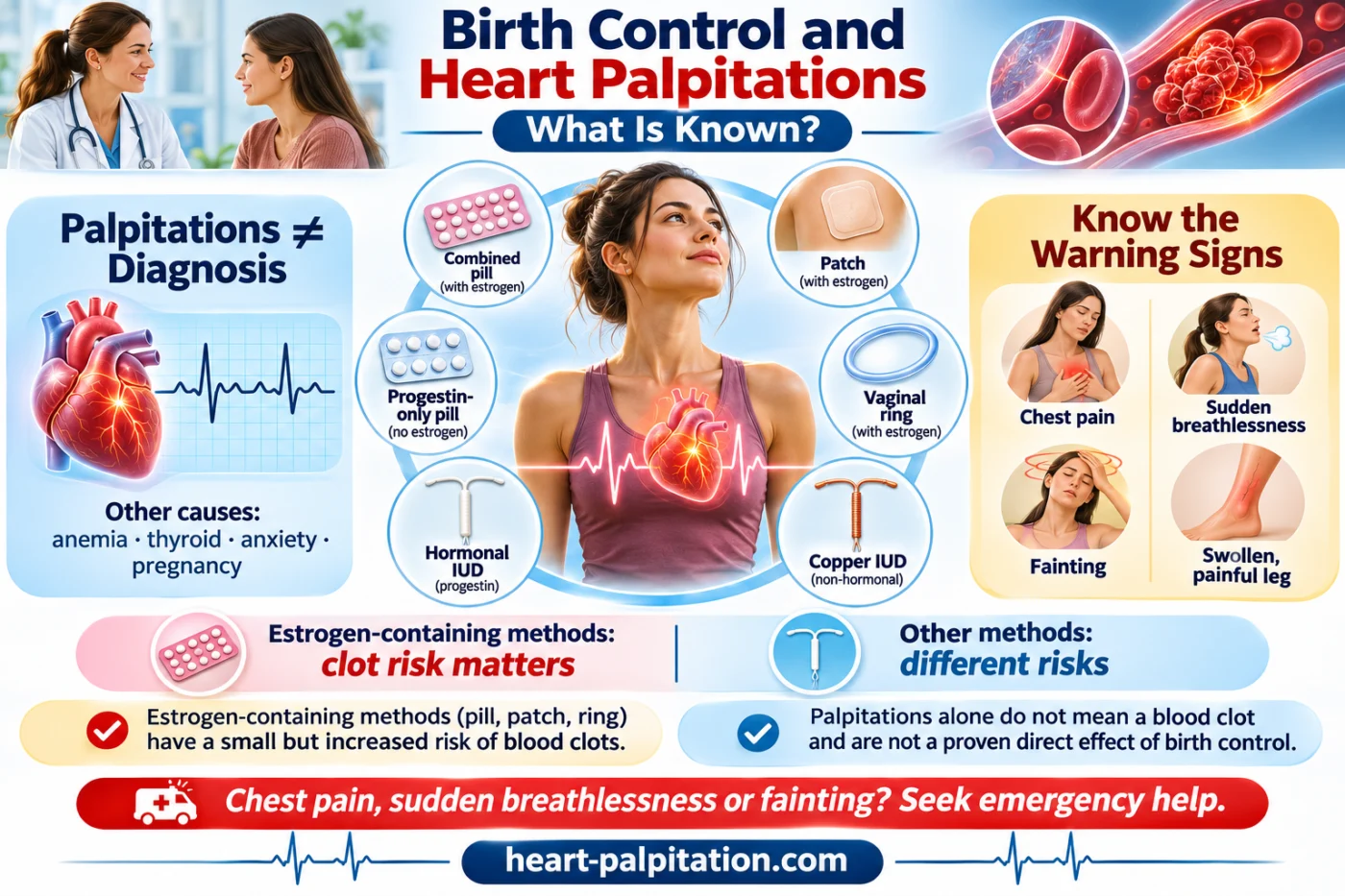
Palpitations that appear after starting birth control are not automatically caused by the contraceptive, and they do not necessarily mean an abnormal heart rhythm. The exact method, other symptoms and medical history matter. Estrogen-containing contraceptives can increase blood-clot risk, so sudden breathlessness, chest pain, fainting or one-sided painful leg swelling must never be dismissed as hormonal changes. Recurrent unexplained palpitations deserve medical assessment.
Key Medical Takeaways
- Starting birth control and noticing palpitations at the same time does not establish causation.
- Combined estrogen-containing methods have clot-related and blood-pressure precautions; progestin-only and nonhormonal methods have different risk profiles.
- Heavy bleeding, anemia, thyroid disease, pregnancy, stimulants and arrhythmias are alternative explanations.
- Sudden breathlessness, chest pain, fainting, coughing blood or stroke-like symptoms require emergency help.
- Discuss persistent palpitations and contraceptive alternatives with a clinician, including backup pregnancy protection if switching methods.
Can hormonal contraception cause palpitations?
Some people notice a racing, pounding or skipping heartbeat after starting or changing contraception. However, palpitations are a symptom, not a diagnosis, and the timing alone does not prove that the contraceptive caused an arrhythmia. Evidence that ordinary hormonal contraceptive use directly causes clinically important arrhythmias is limited; other explanations must be considered.
Why hormonal changes may affect heartbeat awareness
Estrogen and progesterone influence fluid balance, vascular tone and autonomic responses. These processes can alter how noticeable the heartbeat feels, but they do not establish a dangerous rhythm disorder. A normal, faster sinus rhythm, occasional premature beats and sustained arrhythmias can all feel like palpitations; ECG monitoring helps distinguish them.
The type of birth control matters
Combined pill, patch and vaginal ring: These contain estrogen plus a progestin. Important established concerns include blood-pressure changes in some users and increased blood-clot risk, not an assumption that every palpitation is caused by the hormones. Progestin-only pill, implant, injection or hormonal IUD: These differ in systemic exposure, side effects and suitability; risks are not identical. Copper IUD: It contains no hormones, but heavier menstrual bleeding in some users could contribute to iron-deficiency anemia and palpitations. Ask about the exact product rather than treating all contraceptives as equivalent.
A medication change may coincide with poor sleep, anxiety, dehydration, anemia, thyroid illness or pregnancy. The evaluation should keep an open mind: neither dismiss symptoms as hormonal nor assume birth control has injured the heart.
Which symptoms require urgent care?
Most isolated palpitations are not a blood clot. However, estrogen-containing contraception increases the risk of venous thromboembolism compared with not using it. Although absolute risk remains low for many healthy users, a clot in the lung (pulmonary embolism) can cause sudden breathlessness, chest pain, rapid pulse, coughing blood or collapse. A deep-vein thrombosis can cause new one-sided leg pain and swelling. These symptoms require urgent attention, regardless of whether palpitations are present.
Call emergency services now for palpitations with chest pain or pressure, sudden or significant breathlessness, fainting, collapse, coughing up blood, or sudden neurological symptoms such as facial drooping, weakness or difficulty speaking. Do not drive yourself. A new painful, swollen leg also needs prompt same-day assessment for possible thrombosis.
Who needs extra caution with estrogen-containing methods?
Medical eligibility depends on factors including prior blood clots, inherited thrombophilia, migraine with aura, hypertension, smoking at age 35 or older, certain cardiovascular diseases and postpartum circumstances. These considerations are covered by the CDC’s 2024 contraceptive medical eligibility guidance. Never infer that a contraceptive is safe or unsafe solely from age, palpitations or one risk factor; individual medical assessment matters.
What else can explain palpitations?
Bleeding and iron-deficiency anemia
Heavy or prolonged bleeding can lead to iron deficiency and eventually anemia, making the heart beat faster to meet the body’s oxygen needs. Some contraceptives reduce bleeding, whereas a copper IUD may increase menstrual flow in some users. Mention changes in bleeding, fatigue, pallor and exercise tolerance; a complete blood count and ferritin may be appropriate.
Thyroid disease, pregnancy and normal sinus tachycardia
An overactive thyroid, fever, dehydration and pregnancy can cause a faster heartbeat. Pregnancy remains possible with any method because no contraceptive is completely effective. A pregnancy test may be appropriate depending on missed doses, symptoms and menstrual history. Do not assume absence of periods on hormonal birth control rules pregnancy out.
Stress, stimulants and true arrhythmias
Caffeine, energy drinks, nicotine, some medications and anxiety may increase heartbeat awareness. Premature atrial or ventricular beats, SVT and atrial fibrillation are separate possibilities. Sudden onset and offset, sustained irregularity, exercise-triggered episodes or faintness can help determine whether ECG or ambulatory monitoring is needed. A normal resting ECG between attacks does not exclude every intermittent arrhythmia.
Should I stop or switch contraceptives?
If you have severe warning symptoms, seek emergency care immediately rather than waiting for an appointment about contraception. For recurrent but nonemergency palpitations, contact the prescribing clinician to review the timing, formulation, blood pressure, bleeding pattern and alternative causes. The decision to continue, stop or switch depends on the suspected adverse effect, risk factors and contraceptive priorities.
Do not assume all hormonal methods have the same cardiovascular risks. The combined estrogen-containing pill, patch and ring have different eligibility considerations from many progestin-only and nonhormonal options. If estrogen is unsuitable because of a history of thrombosis or migraine with aura, a clinician can help select an appropriate alternative based on CDC guidance.
If you discontinue a method or miss doses, pregnancy protection may be reduced. Discuss backup contraception and whether emergency contraception is needed after recent unprotected sex. Never restart a method that was stopped because of a suspected serious adverse event without medical advice. Patient choice and access to effective contraception remain central to the discussion.
What should I document?
Bring the exact birth-control name, ingredients if known, method (pill, patch, ring, injection, implant, hormonal or copper IUD), start date and any recent change. Record when the palpitations began, duration, frequency, whether the heartbeat feels regular, and whether they occurred at rest, during exercise or with anxiety. Note dizziness, chest pain, breathlessness, leg swelling and any blood-pressure readings.
Also mention nicotine exposure, caffeine or energy drinks, other medications, supplements, heavy menstrual bleeding, missed contraceptive doses, pregnancy possibility, prior blood clots and family history of rhythm disorders or sudden cardiac death. An ECG, longer rhythm monitor, blood count, thyroid testing or pregnancy test may be selected according to the clinical picture rather than ordered routinely for everyone.
For a helpful comparison, see anxiety palpitations vs arrhythmia and palpitations despite a normal ECG.
Emergency Warning Signs
Call emergency services immediately for chest pain, sudden or severe shortness of breath, fainting, collapse, coughing up blood, or sudden face, arm or speech changes. These may be signs of pulmonary embolism, another serious cardiovascular condition or stroke. New one-sided leg swelling or pain requires prompt assessment for a possible clot. Do not drive yourself if severely unwell.
FAQs
Do palpitations mean I have a blood clot?
No. Palpitations alone are nonspecific, but chest pain, sudden breathlessness, fainting or leg swelling require urgent evaluation.
Can an IUD cause heart palpitations?
A temporal association alone cannot establish a cause. A hormonal IUD and copper IUD have different effects; for example, heavier bleeding with a copper IUD may contribute to iron deficiency in some people. Discuss the method and symptoms with your clinician.
Are palpitations a known common side effect of the combined pill?
They are not a reliable or specific indicator that the pill has caused an arrhythmia. Blood-pressure changes and clot-related risks are more clearly established. Seek assessment for new persistent symptoms and emergency care for warning signs.
Should I stop birth control immediately if my heart races?
Get immediate care if you have serious associated symptoms. Otherwise discuss ongoing or recurrent episodes with your prescribing clinician before changing the method, and arrange appropriate pregnancy protection if stopping.
Can I take birth control if I have atrial fibrillation or a previous blood clot?
Contraceptive eligibility depends on the exact heart condition, clot history, medicines and method. Estrogen-containing methods may be unsuitable in some situations. Ask your cardiology and contraceptive care teams for individualized advice.
Related Articles
References
- CDC: Combined Hormonal Contraceptives—2024 Medical Eligibility Criteria.
- European Medicines Agency: Combined Hormonal Contraceptives and Blood-Clot Risk.
- NHS: Combined Pill Side Effects and Risks.
- CDC: U.S. Medical Eligibility Criteria for Contraceptive Use.
- NHS: Heart palpitations.
Educational information only, not individual medical advice.
Explore the full guide: Hormonal Heart Palpitations — Menstrual Cycle, Pregnancy and Menopause.