
Nighttime, Sleep & Position
Waking Up With a Racing Heart: Causes and Warning Signs
A racing heartbeat on waking may follow a dream, stress, dehydration or sleep disruption, but recurrent episodes can also reflect an arrhythmia or another medical condition.
Written by: Dr. Albana Greca, MD, MMedSc, IDF Fellow, Family Physician
Medically reviewed by: Dr. Benard Shehu, Cardiologist
Quick Answer
A racing heartbeat on waking may follow a dream, stress, dehydration or sleep disruption, but recurrent episodes can also reflect an arrhythmia or another medical condition. If symptoms are new, frequent or accompanied by warning signs, discuss them with a clinician rather than assuming they are harmless.
Key Medical Takeaways
- The sensation of palpitations does not establish an arrhythmia.
- Timing, duration, other symptoms and the recorded rhythm guide next steps.
- Recurrent symptoms may require ambulatory ECG monitoring even if a resting ECG is normal.
- Chest pain, fainting or severe breathlessness require emergency care.
Why might your heart race when you wake up?
Waking suddenly with a pounding or racing heart can be frightening, especially when you were asleep moments before. A dream, abrupt awakening or stress response can temporarily increase your heart rate. Poor sleep, fever, dehydration, alcohol, nicotine, caffeine and certain medicines may also contribute. These possibilities apply to males and females, but they do not explain every episode.
The important distinction is between simply becoming more aware of your heartbeat and having a genuinely abnormal rhythm. Tell your doctor whether the racing began and stopped abruptly, felt irregular or continued while you were resting. A watch reading can provide a clue, but the sensation and timing alone cannot identify the cause.
I do not want you to feel that you must decide for yourself whether the episode was anxiety or a heart problem. Anxiety can accompany either a stress response or an arrhythmia. If you take insulin or another medicine that can cause low glucose, mention nighttime sweating, nightmares or confusion on waking and follow your diabetes team’s hypo plan when applicable.
Could sleep apnea contribute?
Sleep apnea causes breathing to become repeatedly interrupted during sleep. You may wake gasping, snorting or choking, with a noticeable heartbeat. Loud snoring, witnessed breathing pauses, morning headaches and daytime tiredness are useful clues. Recurrent nighttime symptoms deserve assessment rather than assuming that you are simply a light sleeper.
Sleep apnea affects both men and women. Loud snoring is more commonly reported in men, while women may more often describe fatigue, insomnia, morning headaches or frequent awakenings. Women’s risk can increase during pregnancy and after menopause. The absence of dramatic snoring does not rule it out, and a person’s body size alone cannot settle the question.
Children can have sleep apnea too. Look for habitual snoring, mouth breathing, pauses in breathing, restless sleep, bedwetting or daytime attention and behavioral difficulties. A pediatric assessment can identify possible airway problems and whether a sleep study is needed. Adult home-testing approaches should not automatically be applied to children.
Could this be an arrhythmia?
An arrhythmia is one possible explanation, including supraventricular tachycardia (SVT), atrial fibrillation or extra beats. SVT can occur in younger people as well as adults, while AF becomes more common with increasing age. Neither being young nor having a previously normal ECG rules out an intermittent rhythm problem.
An ECG recorded during symptoms is particularly helpful. If episodes have stopped by the time you reach the clinic, your clinician may select a Holter, patch or event monitor to record for longer. The choice depends on how often symptoms happen and your overall risk; a short recording may miss an infrequent episode.
Please report fainting, symptoms during exercise, known heart disease or a family history of sudden unexplained death. These details matter for males and females at every age. A very sudden, regular racing sensation may suggest a different rhythm from an uneven flutter, but only an appropriate recording can establish the diagnosis.
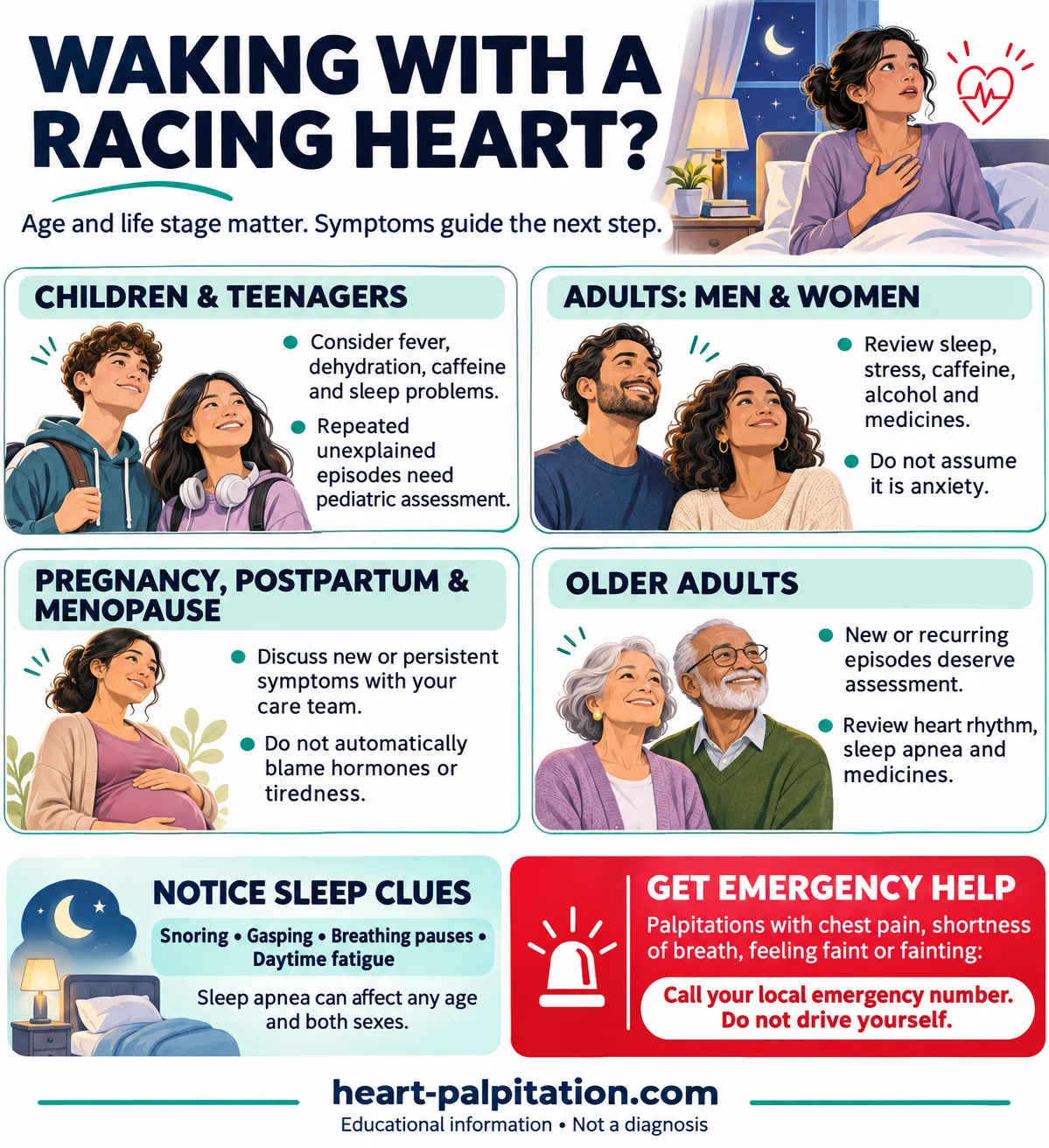
How age, sex and life stage affect the assessment
Children and teenagers
A child’s resting heart rate varies with age, and younger children normally have faster rates than adults. Fever, dehydration, a frightening dream, asthma medicines and caffeine can affect it. For teenagers, ask calmly about energy drinks, nicotine or vaping, stimulant medicines and sleep loss; an open conversation is more useful than blame.
Repeated unexplained episodes need pediatric assessment, especially if the racing starts suddenly or occurs with exercise. Fainting with palpitations, breathing difficulty or a child who looks seriously unwell requires urgent help. For babies and children unable to describe palpitations, breathing, feeding, color and responsiveness may provide the warning signs.
Young and middle-aged adults: males and females
Both men and women can wake with palpitations related to sleep disruption, stress, stimulants, illness or an arrhythmia. Ask about shift work, late-night caffeine, alcohol and medicines, while also considering thyroid disease, anemia and sleep apnea where the history supports them. Being fit or young does not exclude SVT or another rhythm problem.
In men, loud snoring or witnessed breathing pauses should prompt consideration of sleep apnea; in women, fatigue and insomnia may be less obvious clues. These are patterns rather than rules, and either presentation can occur in either sex. Symptoms and appropriate testing should guide the assessment rather than stereotypes.
Menstrual bleeding, pregnancy, postpartum and menopause
If you have heavy periods, fatigue or breathlessness, tell your clinician because iron-deficiency anemia may contribute to palpitations. Pregnancy can also make the heartbeat more noticeable, but persistent or new racing should be discussed with your maternity team rather than automatically attributed to normal pregnancy.
During pregnancy or after a recent birth, a new fast or pounding heartbeat warrants prompt medical advice; chest pain, breathlessness or faintness needs emergency assessment. During perimenopause and menopause, palpitations may accompany hot flushes and disrupted sleep, but thyroid problems, arrhythmias and sleep apnea remain possible. Hormonal symptoms are context, not confirmation of the cause.
Older adults
In older men and women, recurrent waking palpitations deserve consideration of AF, other heart disease, sleep apnea and medication effects. A new pattern matters even when the episode is painless. Bring a complete medication list, including over-the-counter cold remedies and supplements, so the clinician can look for possible contributors.
If the racing and dizziness begin mainly when you sit up or stand, describe this clearly; blood-pressure changes may also need assessment. Do not change heart or blood-pressure medicines yourself. If getting out of bed makes you feel faint, sit or lie down safely and seek help according to the severity of your symptoms.
What to record after an episode
Once you are safe, note when the episode started, whether it woke you from sleep or began after standing, how long it lasted and whether it stopped suddenly. Record chest discomfort, breathlessness, sweating, shaking, dizziness or feeling faint. If you have emergency warning symptoms, getting help takes priority over writing notes or checking devices.
Include the previous evening’s caffeine, energy drinks, nicotine, alcohol, recreational substances, medicines and supplements, along with fever, illness or sleep deprivation. Record any snoring or gasping noticed by a partner or family member. If relevant, mention heavy menstrual bleeding, pregnancy, a recent birth or hot flushes rather than assuming these explain the heartbeat.
For a child, a parent or caregiver can record what they observed and whether the child looked pale, struggled to breathe or behaved unusually. Save an existing smartwatch recording if available, but avoid repeatedly waking a child or checking your own pulse throughout the night. A brief, useful record supports assessment without turning sleep into a monitoring exercise.
When should you discuss testing?
Arrange an assessment when episodes recur, become more frequent, last longer than a few minutes or interfere with sleep and daytime activities. New symptoms with known heart disease or an important family history deserve particular attention. Children and teenagers should be assessed by a clinician familiar with age-appropriate heart rates; adult cutoffs are not suitable for every child.
Your doctor will review the symptoms, examine you and decide whether to arrange an ECG, longer rhythm monitoring or targeted blood tests. Depending on the findings, tests may look for anemia, thyroid disease, electrolyte problems or glucose disturbances. Heavy menstrual bleeding, pregnancy, medicines and other health conditions help determine which tests are useful.
A sleep assessment may be appropriate when gasping, breathing pauses or other sleep-apnea symptoms are present. Pregnancy or recent childbirth should be mentioned early so that the maternity team can help assess symptoms. You do not need every test: we should choose investigations that answer the questions raised by your history and explain the next steps clearly.
Emergency Warning Signs
Call your local emergency number for current palpitations with chest pain, shortness of breath, feeling faint, fainting or collapse. Do not drive yourself. If these warning symptoms have stopped, arrange an urgent medical assessment. A previous normal ECG does not exclude a new emergency.
For a baby or child, seek emergency help for serious breathing difficulty, blue or gray lips, collapse, abnormal unresponsiveness or a racing heartbeat with fainting. During pregnancy or after childbirth, do not dismiss chest pain, breathlessness or faintness as tiredness or anxiety. Tell emergency staff about the pregnancy or recent birth.
Most Asked Questions
Can a nightmare cause a racing heart?
A frightening dream or abrupt awakening can cause a temporary stress response with a racing heartbeat. Nighttime panic can also wake someone with intense fear and physical symptoms, although remembering a nightmare is not necessary for every episode.
If it happens repeatedly, lasts longer than expected or occurs with other concerning symptoms, arrange assessment. Do not assume that fear proves anxiety caused the episode: feeling your heart race can itself make you frightened.
Is waking with a pounding heart the same as atrial fibrillation?
A pounding heartbeat on waking is not the same as atrial fibrillation. AF is a specific rhythm disorder requiring ECG confirmation, while a pounding sensation can occur with a normal rhythm or several other rhythm disturbances.
If the heartbeat feels irregular or episodes recur, your clinician may recommend longer monitoring. Keep following any existing AF treatment plan and do not add extra doses or change anticoagulants without specific advice.
Should I get checked for sleep apnea?
Discuss sleep-apnea assessment if you wake gasping, have witnessed breathing pauses, snore habitually or remain tired despite enough time in bed. Women may also present with insomnia, fatigue or morning headaches rather than loud snoring.
For children, habitual snoring, mouth breathing, attention problems and breathing pauses should be discussed with their pediatric clinician. Sleep testing and its interpretation should be appropriate for the person’s age and medical circumstances; a normal consumer wearable reading cannot rule out sleep apnea.
Related Articles
Medical References
- Gauer RL, Thomas MF, McNutt RM. Palpitations: Evaluation, Management, and Wearable Smart Devices. American Family Physician, 2024. Source.
- National Institute for Health and Care Excellence. Atrial fibrillation: diagnosis and management (NG196). Guideline.
- American Heart Association. Sleep apnea and cardiovascular disease. Further information.
- NHS: Heart palpitations.
- NHLBI: Sleep Apnea—Symptoms.
- NHLBI: Sleep Apnea and Women.
- NHLBI: Sleep Apnea in Children.
- American Academy of Pediatrics: Fast, Slow and Irregular Heartbeats.
- CDC: Urgent Maternal Warning Signs.
- NIDDK: Low Blood Glucose.
- NHS: Menopause and perimenopause symptoms.
Explore more: Nighttime, Sleep & Position — Heart Palpitations Guide