
EXERCISE & HEART PALPITATIONS
Can You Exercise With Heart Palpitations? Safety and Next Steps
Whether exercise is appropriate depends on the pattern of palpitations, associated symptoms and any diagnosed heart condition. Unexplained exertional palpitations should be assessed before strenuous activity.
Updated: November 9, 2026
Written by: Dr. Albana Greca, MD, MMedSc, Family Physician, IDF Fellow
Cardiology specialist profile: Dr. Benard Shehu — medical review not yet confirmed
Quick Answer
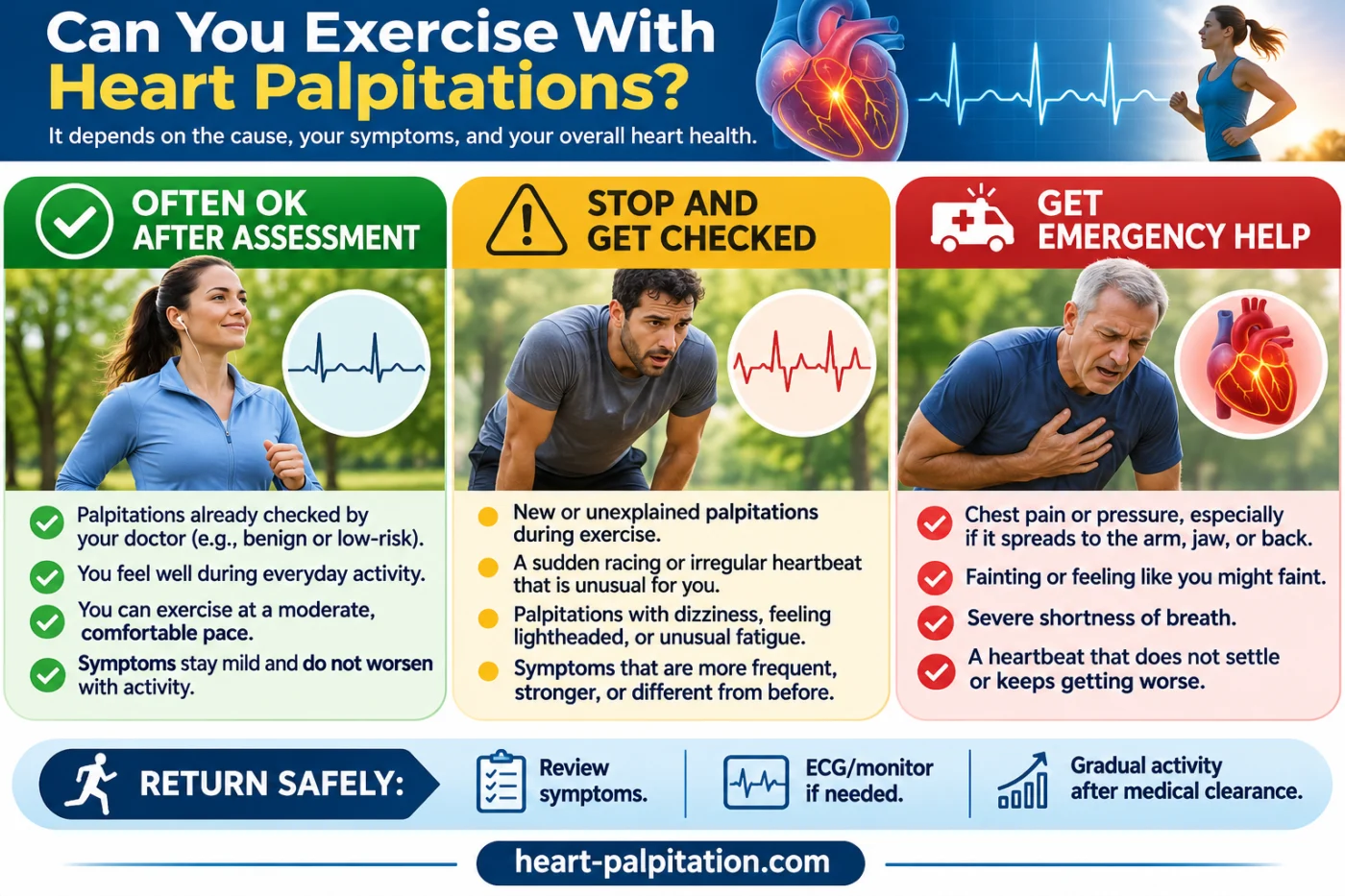
Sometimes, yes. Many people with previously investigated, low-risk palpitations can exercise, and regular physical activity benefits heart health. But new or unexplained palpitations that occur during exertion should be assessed before vigorous exercise, particularly when they are sudden, persistent, irregular or accompanied by dizziness, chest pain or breathlessness. Stop exercising when concerning symptoms occur. The decision to resume activity depends on the underlying rhythm and your clinician’s advice—not simply a normal resting ECG.
Key Medical Takeaways
- Your pulse normally rises during exertion. Feeling it beat harder or faster does not automatically mean a heart rhythm disorder.
- Some people with evaluated benign extra beats can remain physically active, while unexplained exercise-triggered episodes require assessment before hard workouts.
- Stop exercising for new or unusual racing, fluttering or skipping sensations; call emergency services for ongoing palpitations that will not settle or symptoms with chest pain, significant breathlessness or faintness.
- A resting ECG may be normal between episodes. Selected patients need rhythm monitoring or an exercise ECG.
- After medical clearance, returning gradually is generally better than avoiding all activity indefinitely.
When Can You Exercise With Heart Palpitations?
Exercise makes the heart pump faster and harder to deliver oxygen to working muscles. You may notice a strong but regular heartbeat while climbing stairs, jogging or cycling. This normal increase is called sinus tachycardia, and your heart rate typically slows during recovery. By contrast, a sudden-onset racing rhythm, irregular beating or symptoms that seem out of proportion to the activity may deserve further evaluation.
People with previously assessed premature atrial or ventricular contractions (PACs or PVCs) and no concerning underlying disease may be able to continue activity with individualized advice. A few isolated extra beats are not the same as sustained ventricular tachycardia, atrial fibrillation or an inherited rhythm disorder. You cannot classify the rhythm by feeling it alone; a normal resting ECG does not exclude an intermittent problem.
For people cleared to exercise, moderate walking, cycling or swimming can support cardiovascular fitness and wellbeing. The right activity and intensity depend on your symptoms, test results, medical history and medications. If palpitations reliably begin during exertion and have not been explained, avoid pushing through intense exercise while arranging clinical assessment.
Palpitations during exercise vs after exercise
During activity, a gradual increase in a regular heartbeat is often physiological. An abrupt racing episode during exertion, especially with dizziness or near-fainting, needs more caution. After activity, shifts in adrenaline, cooling down, dehydration or heightened heartbeat awareness may contribute to palpitations, but recurring or severe episodes still warrant assessment. Read our guide to palpitations during exercise and palpitations after exercise.
When Should You Stop Exercising?
Stop the session for new, unexpected or unusually sustained racing, pounding, irregular or skipped beats. Move away from equipment, traffic or water, and sit or lie somewhere safe if lightheaded. Do not resume a hard workout just because the symptoms fade. If the episode is unexplained, especially when it occurs repeatedly during exercise, seek medical review before returning to vigorous activity.
Call emergency services immediately if palpitations are ongoing and will not settle or occur with chest pain or pressure, significant breathlessness, fainting, collapse or feeling about to faint. These symptoms may indicate a serious cardiac problem or another urgent condition. Do not drive yourself. If warning symptoms have stopped, obtain urgent medical advice rather than simply returning to exercise.
Do not try to “run through” unexplained palpitations, use a stimulant to overcome fatigue or treat a possible arrhythmia yourself with unprescribed medicines. Breathing slowly may help you remain calm, but a response to relaxation cannot rule out an arrhythmia. For more on differentiating stress-related symptoms, see anxiety palpitations vs arrhythmia.
How to Return to Exercise Safely After Palpitations
Step 1: Identify the likely cause. Review what happened with a clinician, particularly if palpitations began with exercise. Depending on the history, this may require ECG monitoring, blood tests or stress testing. Do not use a generic target heart rate or a single normal smartwatch reading as medical clearance.
Step 2: Follow your individualized plan. If assessed as low risk and cleared to exercise, begin with comfortable activity at a level where you can usually talk in full sentences, then build duration and intensity gradually as tolerated. Warm up and cool down. Rest when ill or unusually fatigued. People recovering from cardiac events or living with heart failure may benefit from a supervised cardiac rehabilitation program.
Step 3: Track meaningful patterns, not every heartbeat. Note which activity brought on symptoms, their duration, whether you could continue talking and whether there was dizziness, pain or breathlessness. Staying adequately hydrated and avoiding excessive stimulant use can help some people, but these measures do not replace assessment. Do not begin potassium, magnesium or other electrolyte supplements without a clinical reason.
What types of exercise might be appropriate?
Walking is often a practical low-impact starting point after appropriate clinical clearance. Swimming, cycling, running, strength training and high-intensity intervals place different demands on the circulation. People with unexplained exertional symptoms should not assume swimming alone, exercising at home or lifting lighter weights is automatically safe; choose the level of activity together with your clinician.
Sports, Gym Training and Higher-Risk Patient Groups
Teenagers and competitive athletes: Even young, highly fit people can have SVT, inherited electrical conditions or structural heart disease. New exertional fainting, racing attacks or a family history of sudden unexplained death requires prompt evaluation. Team athletes may need sport-specific ECG monitoring and specialist return-to-play advice; not all palpitations mean permanent sports restriction.
Women, pregnancy and menopause: Pregnancy and hormonal changes may make the heartbeat more noticeable, while anemia, thyroid disease or rhythm disorders may also contribute. New exertional symptoms in pregnancy deserve tailored medical advice. During perimenopause, do not assume every racing sensation is hormonal or anxiety-related.
Older adults or people with chronic conditions: Atrial fibrillation, coronary artery disease, valve problems, heart failure, diabetes and certain medicines can change exercise safety. Patients taking beta blockers may not reach standard heart-rate targets, and those with kidney disease or taking diuretics should seek advice before using electrolyte products. Tailored exercise and, where appropriate, rehabilitation may still be beneficial.
Gym users and endurance athletes: Pre-workout stimulants, energy drinks, dehydration, heat and performance-enhancing substances can worsen palpitations. Very high-volume endurance training may carry particular rhythm risks in some athletes. People with known cardiomyopathy, complex ventricular arrhythmias or inherited cardiac conditions need specialist risk assessment rather than generic exercise clearance. See the 2024 Heart Rhythm Society consensus on arrhythmias in athletes.
What Should You Tell Your Doctor, and Which Tests May Help?
Describe the exact activity, how hard you were exercising, whether palpitations began suddenly or gradually, how long they lasted and whether they happened before, during or after exertion. Mention dizziness, faintness, chest discomfort, unusual breathlessness, recent illness, family history and medicines or supplements. A wearable ECG recording can sometimes assist, but its absence or a normal heart-rate display does not rule out arrhythmia.
A clinician may check vital signs and perform a 12-lead ECG. If episodes are intermittent, a Holter, patch or event monitor may capture the rhythm. When symptoms reliably occur with exercise, a supervised exercise ECG or monitoring during the provoking activity may be appropriate. An echocardiogram, selected blood tests (including blood count, thyroid function and electrolytes) or further cardiology assessment may be indicated by the history and examination—not everyone needs every test.
Ask three questions before resuming strenuous exercise: What rhythm is suspected or confirmed? What intensity is reasonable for me now? Which symptoms should make me stop or seek help? The aim is to return to beneficial physical activity safely whenever possible, without overlooking high-risk causes. Read why a normal ECG may miss intermittent palpitations and what a normal Holter means.
Emergency Warning Signs
Call your local emergency number now if palpitations do not settle or are accompanied by chest pain or pressure, significant shortness of breath, fainting, collapse or feeling close to fainting. Do not drive yourself. Even if the episode passes, warning symptoms warrant urgent assessment. Do not resume strenuous activity until you have been evaluated.
Frequently Asked Questions
Can walking be safer than running?
Lower-intensity activity may be easier to tolerate, but unexplained symptoms during walking also require assessment. Safety depends on the underlying cause.
Are electrolytes always the answer?
No. Dehydration and electrolyte abnormalities are only some possible contributors. Unnecessary electrolyte or mineral supplements can be harmful, particularly with kidney disease or certain medicines.
Can I go to the gym if I have PVCs?
Many people with evaluated low-risk PVCs can exercise, but the decision depends on symptom pattern, PVC burden, heart structure and other findings. Seek personalized advice before intense workouts, especially if PVCs appear or worsen with exertion.
Can exercise cause a dangerous arrhythmia?
Most exercise-related changes in heartbeat are normal, but exertion can trigger certain rhythm problems in susceptible people. Fainting during exercise or palpitations with chest pain or marked breathlessness requires urgent attention.
Is a normal resting ECG enough to clear me for running?
Not always. If episodes occur only during exercise, a resting ECG between episodes may be normal. Your clinician may suggest an exercise test or ambulatory rhythm monitor based on your history.
Should I stop exercising forever after an episode?
Not necessarily. Many people return to activity after evaluation, sometimes with a gradual or condition-specific plan. However, unresolved exertional symptoms should not be ignored or challenged by strenuous exercise.
Related Guides
Palpitations after exercise · Palpitations and dizziness · Tests and diagnosis
Medical References
- NHS: Heart palpitations.
- NICE NG196: Atrial fibrillation diagnosis and management.
- American Heart Association: About Arrhythmia.
- Heart Rhythm Society (2024): Expert Consensus on Arrhythmias in Athletes.
- American Heart Association/American College of Cardiology: Clinical Considerations for Competitive Sports Participation.
Educational information only; not a substitute for individualized medical advice.
Explore the full exercise guide: Heart Palpitations During and After Exercise.