
Diagnosis & Treatment · Blood Tests
What Blood Tests Are Done for Heart Palpitations?
From thyroid function and anemia to potassium and magnesium: which blood tests can help explain palpitations, and what does it mean when results are normal?
Medically reviewed by: Dr. Benard Shehu, Cardiologist
Quick Answer
Doctors may request a complete blood count (CBC), thyroid-stimulating hormone (TSH), electrolytes and kidney function when investigating palpitations. Ferritin, magnesium, glucose or other tests can be appropriate depending on your symptoms and history. These tests look for possible contributors; they cannot confirm or rule out an intermittent arrhythmia. An ECG or heart monitor records the rhythm itself.
Key Medical Takeaways
- CBC helps identify anemia; ferritin helps evaluate iron stores.
- TSH and sometimes free T4 are used when thyroid disease is suspected.
- Potassium, calcium, renal function and sometimes magnesium can reveal relevant abnormalities.
- Normal blood tests do not exclude an intermittent heart rhythm disorder.
- Troponin is reserved for selected urgent situations—not routine uncomplicated palpitations.
Why might blood tests be ordered?
Blood tests do not directly diagnose most arrhythmias. They help identify medical conditions that can cause a fast, forceful or irregular heartbeat, or make existing palpitations more noticeable. Your clinician chooses tests based on your symptoms, physical examination, medications and medical history—not everyone needs every test.
A normal ECG does not rule out intermittent arrhythmias, and normal blood work does not replace heart rhythm monitoring.
When I recommend a test, I want you to understand the question it is meant to answer. A healthy person with occasional brief symptoms may need a different approach from someone with kidney disease, heart failure or a recent medicine change. Existing results can be useful, and repeating a large panel without a reason does not necessarily bring us closer to an explanation.
Complete blood count (CBC): anemia and infection
A CBC assesses hemoglobin and red blood cells, which can help detect anemia. Anemia may lead to a faster heartbeat, shortness of breath, fatigue and palpitations. White blood cell results may contribute to an assessment for infection when symptoms suggest it.
If iron deficiency is suspected, your clinician may also request ferritin and sometimes other iron studies. A normal CBC does not always exclude early iron depletion. See low iron, anemia and palpitations.
Results need context. Ferritin can rise with inflammation, so a normal or raised value does not always exclude iron deficiency in someone with chronic inflammatory disease. Your clinician may consider other iron measurements and the cause of any anemia, rather than assuming that every low hemoglobin result should be treated with iron.
Thyroid blood tests: TSH and free T4
Overactive thyroid function can produce a racing heartbeat, tremor, heat intolerance, weight loss and sometimes atrial fibrillation. TSH is generally the starting test; free T4 and occasionally T3 may be added when appropriate or when TSH is abnormal. Thyroid testing is particularly useful when the history raises suspicion of thyroid disease or a newly diagnosed atrial arrhythmia.
Read more about thyroid problems and heart palpitations.
Tell your clinician about thyroid medicines and biotin-containing hair or nail supplements, which can interfere with some thyroid tests. Acute illness may also distort results. Children, pregnancy and suspected pituitary disease require a different testing or interpretation approach; a single adult reference range should not be applied to everyone. Follow instructions about medicines and supplements rather than stopping them yourself.
Electrolytes and kidney function
Blood tests may measure potassium, sodium, calcium and renal function (creatinine/eGFR). Significant potassium or calcium abnormalities can affect cardiac electrical activity. Magnesium may be measured selectively, for example with relevant medications, suspected deficiency or certain arrhythmias; it is not required for every person with palpitations.
Interpretation depends on the specific result, symptoms and kidney function. Do not start potassium or magnesium supplements solely because you have palpitations; excess doses can be harmful.
This is especially relevant after vomiting or diarrhea, with chronic kidney disease, or when taking medicines that affect kidney function or potassium. The same symptom can occur with different abnormalities, so a racing heart cannot tell you whether potassium is low or high. Some unexpected results need confirmation, while a markedly abnormal result may require urgent action directed by the treating team.
Blood glucose and other tests in selected cases
Glucose measurement may be useful when symptoms suggest low blood sugar, such as sweating, trembling, hunger or confusion, particularly in patients using glucose-lowering medicines. Additional studies should follow the clinical picture.
Troponin is not a routine palpitations blood test. It may be appropriate urgently when symptoms or findings raise concern for heart muscle injury, such as possible acute coronary syndrome. BNP/NT-proBNP may be considered when heart failure is suspected—not as routine screening for isolated palpitations. Pregnancy testing may be appropriate in some patients depending on circumstances and treatment decisions.
HbA1c reflects average glucose over roughly three months; it cannot show whether glucose fell during a particular palpitation. If low glucose is suspected, a measurement during symptoms may help, especially for someone taking insulin or a sulfonylurea. Follow your established hypo plan and do not delay treatment or emergency care to obtain a laboratory sample.
At-a-glance: which blood test checks what?
| Blood test | Reason it may be ordered |
|---|---|
| CBC | Anemia or other blood-count abnormalities |
| Ferritin / iron studies | Suspected iron deficiency |
| TSH ± free T4 | Suspected thyroid dysfunction |
| Potassium, calcium, sodium, creatinine | Electrolyte disturbances and kidney function |
| Magnesium | Selected risk factors or suspected electrolyte issue |
| Glucose | Suspected hypoglycemia or metabolic contributor |
| Troponin (urgent, when indicated) | Possible acute heart muscle injury—not routine screening |
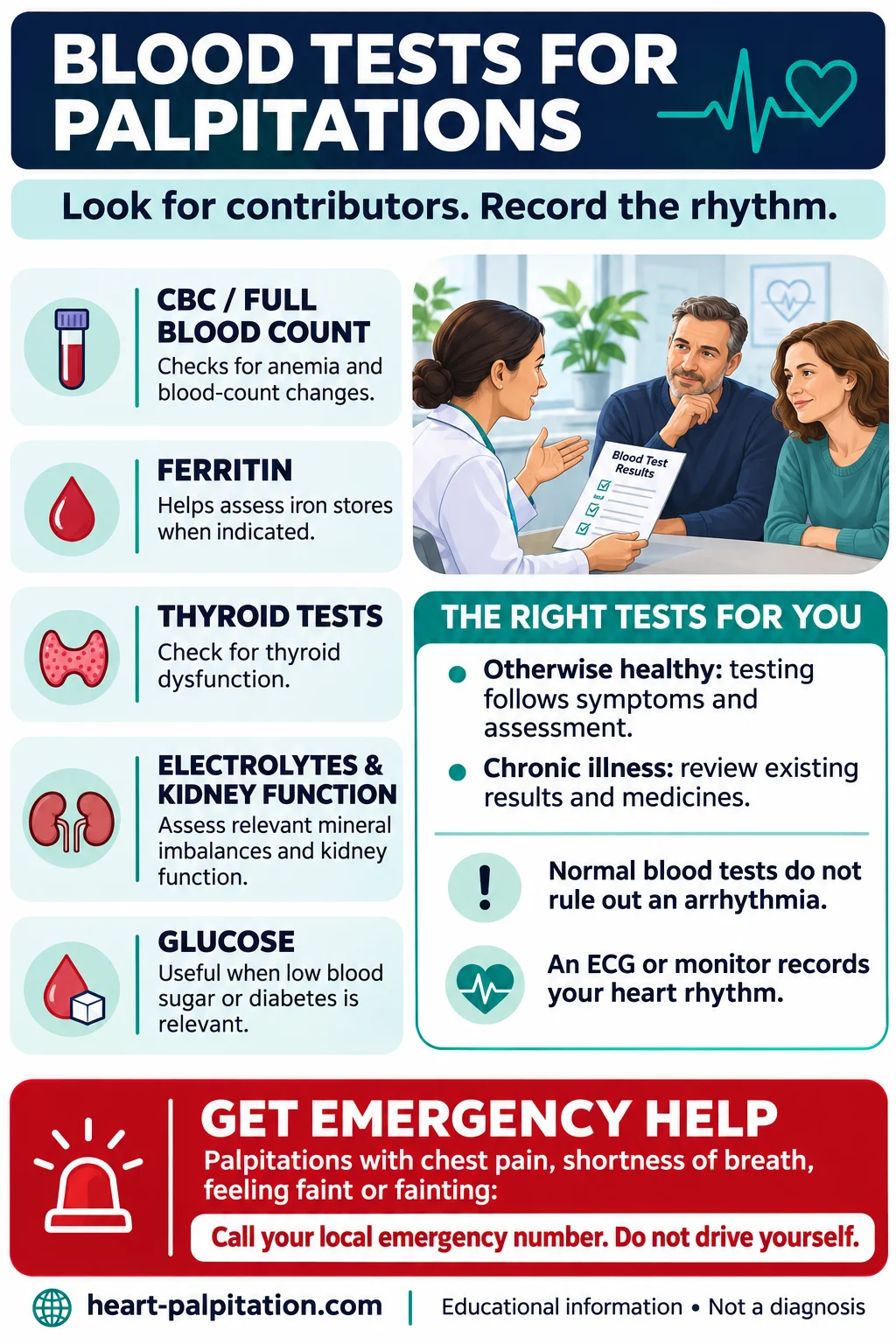
Healthy people and chronic illness: different testing scenarios
These examples explain why there is no single blood-test package for everyone with palpitations. Your age, symptoms, medicines, existing conditions and previous results shape the choice. A test can identify a contributor without proving that it caused every episode.
Otherwise healthy adults with brief or occasional symptoms
For example, a healthy man or woman may notice a few skipped beats after poor sleep or several caffeinated drinks, with no other symptoms. Assessment starts with the history, examination and consideration of an ECG. Blood tests are chosen for plausible contributors rather than because every palpitation requires every available test.
If symptoms recur, last longer, become irregular or occur during exercise, return for review. A limited set of reassuring results should support a clear plan, not become a reason to ignore a different episode. Equally, repeatedly testing vitamin and mineral levels without a clinical clue may add uncertainty rather than useful answers.
Children, teenagers and younger adults
A young person with fatigue, restricted food intake, heavy periods, recent illness or weight change may need targeted testing for anemia or another suspected condition. A clinician should interpret results using age-appropriate ranges. Caffeine, energy drinks and prescribed stimulant or asthma medicines are also worth discussing.
Blood tests cannot rule out an inherited electrical heart problem or intermittent SVT. Palpitations with exercise-related fainting, unexplained collapse or a family history of sudden death need appropriate cardiac assessment even if every blood result is normal. For children, the evaluation should be led by a clinician familiar with pediatric symptoms.
Menstruation, heavy bleeding and menopause
Heavy menstrual bleeding with fatigue or breathlessness may justify a CBC and iron assessment. The purpose is to identify anemia or depleted stores and investigate why they occurred. Men and women without periods can also develop anemia; unexplained iron deficiency should not be assumed to be dietary.
In perimenopause or menopause, palpitations may accompany hot flushes and poor sleep, but thyroid disease can resemble these symptoms. Testing follows the clinical picture rather than automatically blaming hormones. A normal thyroid result does not establish that menopause caused the palpitation, and an ECG may still be appropriate.
Pregnancy and after childbirth
Pregnancy can make the heartbeat more noticeable, but persistent symptoms may warrant a blood count and selected tests for thyroid or electrolyte problems alongside ECG assessment. Pregnancy changes the interpretation of several laboratory results, so the maternity team should help review them.
After a recent birth, blood loss, infection and other conditions may also contribute. New fast or pounding heartbeat deserves prompt advice, while chest pain, breathlessness or faintness needs emergency assessment. Do not wait for an outpatient blood-test appointment or assume a previously normal result covers new symptoms.
Older men and women
In an older person, the assessment often includes medicines, kidney function, anemia and thyroid disease where appropriate. Recent results and changes from the person’s usual values may be more informative than an isolated number. Multiple illnesses can contribute at once.
New irregular palpitations may need an ECG or longer monitoring even when laboratory results are normal. Bring a full medication list and mention falls, fainting, exercise intolerance or new breathlessness. Testing should address those findings rather than assuming that symptoms are simply part of aging.
Diabetes
If you take insulin or medicines that can cause hypoglycemia, palpitations with sweating, shaking or confusion may reflect low glucose. Check during symptoms when possible and follow your agreed treatment plan. HbA1c can help assess longer-term diabetes management, but a satisfactory HbA1c does not exclude individual lows.
Diabetes may also coexist with kidney disease or heart disease, which can influence test selection and urgency. A glucose explanation should not automatically replace rhythm assessment. Seek emergency help for cardiac warning symptoms and discuss recurrent glucose-related episodes with your diabetes team rather than adjusting medicines alone.
Chronic kidney disease
Kidney function affects electrolyte balance and the handling of several medicines. Potassium, creatinine/eGFR and other tests may therefore be particularly relevant when palpitations occur. The clinician compares the results with your baseline, recent illness, treatment and—if relevant—dialysis circumstances.
Do not take potassium, magnesium or “electrolyte support” products or increase fluid intake without advice. Both low and high potassium can be important, and kidney disease changes the safety of supplements. Markedly abnormal results or palpitations with weakness, faintness or chest symptoms may require urgent assessment.
Heart failure, hypertension and medicines affecting potassium
Some diuretics can lower potassium, while ACE inhibitors, ARBs and mineralocorticoid receptor antagonists can raise it. Kidney function and electrolyte tests help monitor treatment safely, particularly after dose changes or an illness. This monitoring is related to, but not identical with, investigating a new palpitation.
BNP or NT-proBNP may help when heart failure is suspected, but neither is a routine screening test for isolated palpitations. Kidney function, body size and treatment can affect interpretation. Do not change diuretics, heart medicines, salt or fluid intake yourself; worsening swelling or breathlessness needs clinical review.
Known thyroid disease
For someone taking thyroid replacement or antithyroid treatment, a new racing heartbeat may prompt a review of symptoms, dose and relevant thyroid results. A low TSH or abnormal hormone level needs interpretation in context rather than an automatic dose change based only on the palpitation.
Mention biotin supplements and recent acute illness before testing. Follow the clinician’s advice on test timing and repeat measurements, since testing too soon after a change may be unhelpful. Even if thyroid results explain a contributor, an irregular or sustained racing rhythm may need separate ECG assessment.
Asthma, COPD and other medicine-related symptoms
Some reliever inhalers can cause a faster or more noticeable heartbeat, and selected treatments can affect potassium. A clinician may consider testing when symptoms, treatment intensity or other risk factors suggest it. Mild symptoms after a dose do not mean every patient needs repeated electrolyte panels.
Do not stop essential breathing treatment yourself. If you need your reliever more often, arrange a review of the lung condition and treatment as well as the palpitations. Severe breathing difficulty or palpitations with chest pain or faintness requires urgent help, not waiting for routine blood work.
Chronic inflammation, digestive disease or persistent anemia
Inflammatory illness, kidney disease, blood loss and problems absorbing nutrients can each affect hemoglobin or iron measurements. Ferritin may be misleadingly normal or raised during inflammation, so additional information such as transferrin saturation may be useful when iron deficiency remains suspected.
Vitamin B12, folate, inflammatory markers or other tests are selected for the history and blood-count pattern, not automatically added for everyone. The aim is to understand and treat the cause of anemia. Do not start a collection of supplements to correct a result without discussing what the abnormality means.
What if all my blood tests are normal?
Normal blood work is often reassuring, but it does not prove that every possible cause of palpitations has been excluded. Premature beats, intermittent supraventricular tachycardia and atrial fibrillation may occur even when blood tests are normal.
If symptoms recur, a clinician may consider a resting ECG or ambulatory rhythm monitoring. For daily symptoms, a Holter monitor may be suitable; for less frequent episodes, longer ECG patches or event monitors may have better diagnostic yield. See palpitations every day despite normal tests.
Ask what the normal results make less likely and what remains unexplained. If typical symptoms have already been captured with reassuring rhythm, care may focus on triggers or another contributor. If symptoms were never recorded, or the pattern changes, rhythm monitoring may answer a question that repeating normal blood tests cannot.
How to prepare and discuss results
- Bring a medication and supplement list, including decongestants, caffeine products and diuretics.
- Describe episode frequency, duration, associated symptoms and possible triggers.
- Ask which medical condition each proposed test is intended to assess.
- Follow laboratory instructions about fasting; most of these tests do not universally require fasting.
- Interpret mild abnormalities with a clinician rather than attempting to correct them using supplements.
Tell the team if fasting makes you unwell, you take glucose-lowering medicines, you are pregnant or you have a fluid restriction. Ask for specific preparation instructions; do not skip food, fluids or medicines simply because you are having “blood work.” Let staff know if you tend to faint during blood draws.
Arrange how and when results will be reviewed, including who will contact you about an urgent abnormality. Reference ranges vary with the laboratory and circumstances, and a small result outside the range does not automatically explain palpitations. Compare trends with your clinician before changing treatment.
When blood tests should not delay urgent care
Call your local emergency number for current palpitations with chest pain or pressure, shortness of breath, feeling faint, fainting or collapse. Do not drive yourself. Do not wait for routine blood tests or assume previous normal results rule out an emergency. If these warning symptoms have stopped, arrange an urgent medical assessment.
Arrange timely clinical evaluation if symptoms are new, worsening, exertional, or associated with known heart disease or a family history of sudden cardiac death.
Most Asked Questions
Do I need a thyroid blood test for palpitations?
Not always. TSH is commonly considered when symptoms suggest thyroid dysfunction or certain arrhythmias are suspected. Testing is individualized.
Tell your clinician about weight change, tremor, heat intolerance, thyroid medicines and supplements. The appropriate tests and reference ranges can differ in children, pregnancy and pituitary disease.
Can low iron cause heart palpitations?
Iron-deficiency anemia can cause faster or more noticeable heartbeats. Ferritin may help evaluate iron deficiency, even when early changes are not obvious on a CBC.
If deficiency is found, ask why it occurred and how treatment will be monitored. A normal hemoglobin does not exclude depleted stores, while ferritin may be affected by inflammation.
Which electrolyte is most important for heart rhythm?
Potassium, calcium and magnesium all influence cardiac electrical activity. Which levels matter clinically depends on the patient and the type of abnormality.
Do not choose a supplement based on symptoms alone. Kidney disease and medicines can change levels in either direction, and a significant abnormality may require supervised treatment.
Will blood tests show whether I have atrial fibrillation?
No. Atrial fibrillation is diagnosed using an ECG tracing; blood tests can identify contributors or inform treatment.
Normal blood results cannot exclude intermittent AF. If suspicion remains, the key next step is an appropriate rhythm recording rather than ordering a larger blood panel.
Should I take magnesium if my blood tests are normal?
Not automatically. Supplements are not a substitute for identifying a rhythm problem and can be unsafe in some circumstances, including kidney disease.
Discuss diet, medicines, kidney function and whether there is a genuine reason to suspect deficiency. Treatment should follow the clinical findings rather than a general recommendation for everyone with palpitations.
Related Reading
Medical References
- Gauer RL, Thomas MF, McNutt RM. Palpitations: Evaluation, Management, and Wearable Smart Devices. American Family Physician. 2024. Source.
- Merck Manual Professional. Palpitations: Evaluation. Source.
- NICE. Atrial fibrillation: diagnosis and management (NG196). Guidance.
- NHS: Blood tests.
- NHLBI: Arrhythmias—Diagnosis.
- NICE: Thyroid disease—Assessment and management.
- NICE: Chronic heart failure—Diagnosis and management.
- NIH Office of Dietary Supplements: Iron.
- NIDDK: The A1C Test and Diabetes.
- NHS: Side effects of salbutamol inhalers.
- NIDDK: Healthy Eating for Adults with Chronic Kidney Disease.
- NHS: Heart palpitations.
- CDC: Urgent Maternal Warning Signs.
Explore this topic: Heart Palpitation Tests & Normal Results — complete diagnostic guide.